Guides
A 3 carat loose diamond is a large stone. A round near 3.00 ct is about 9.3–9.5 mm wide, and small grade differences are easier to see.
Weight can hide in the depth. Two 3 carat rounds with different depth percentages will not face up the same. Read length, width, and depth on the certificate before you treat them as equal.
Oval, pear, and marquise at 3 carats look substantially longer than a round. That spread is why some people choose a fancy shape when they want presence more than a round outline.
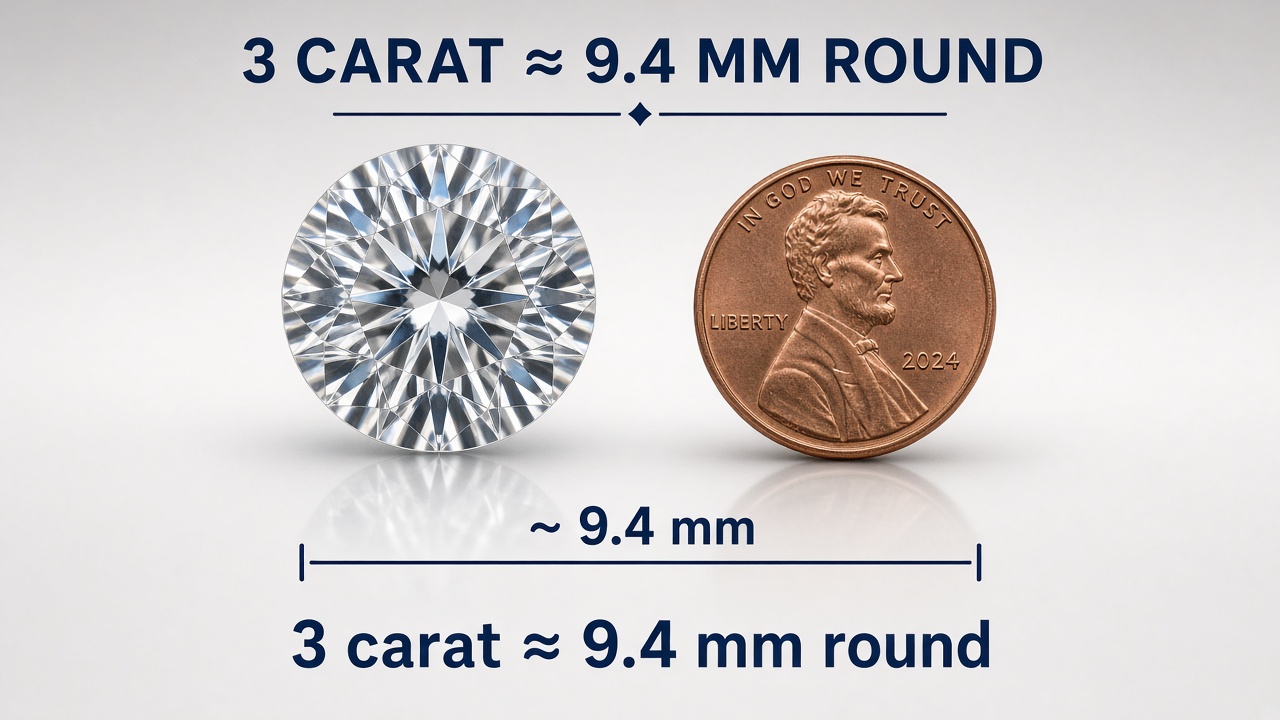
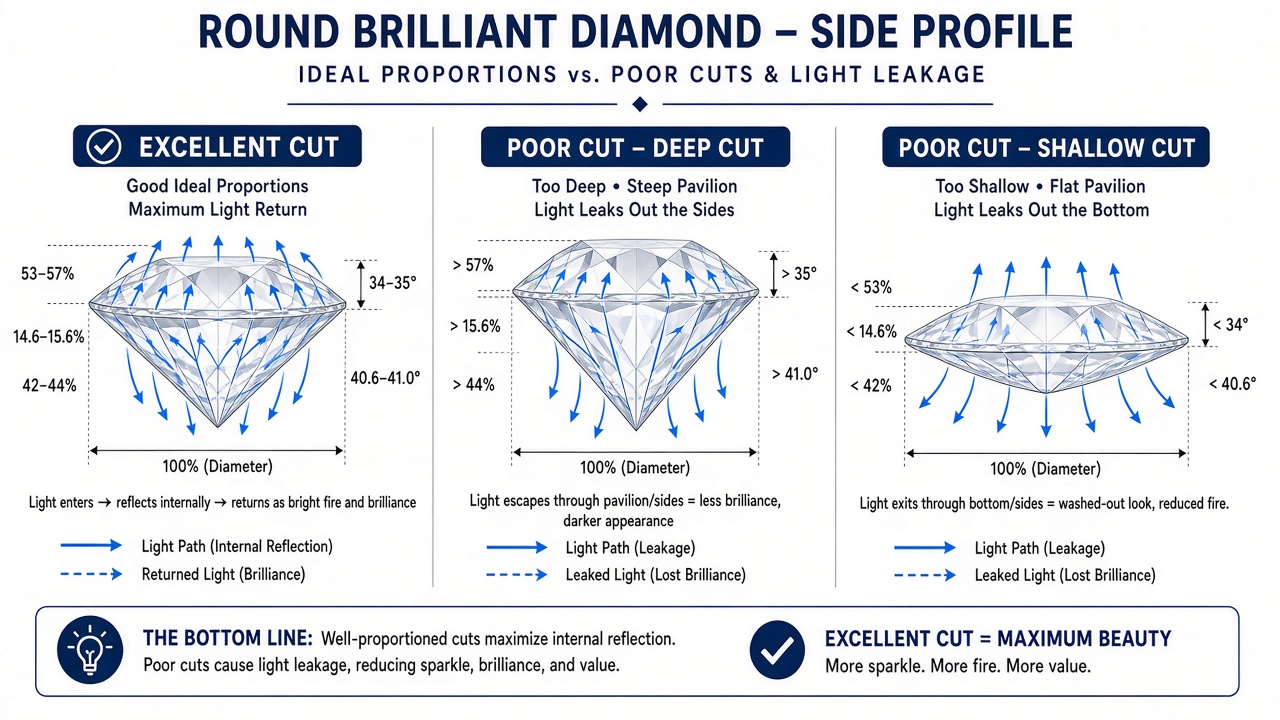
Table percentage is the flat top relative to width. Depth percentage is the stone’s height relative to width. Extreme values can make a diamond look small for its weight or leak light.
There is no single perfect pair of numbers for every shape. For rounds, stay near the range associated with Excellent cut and then confirm brightness in the video. For fancy shapes, the image matters more than a cut grade.
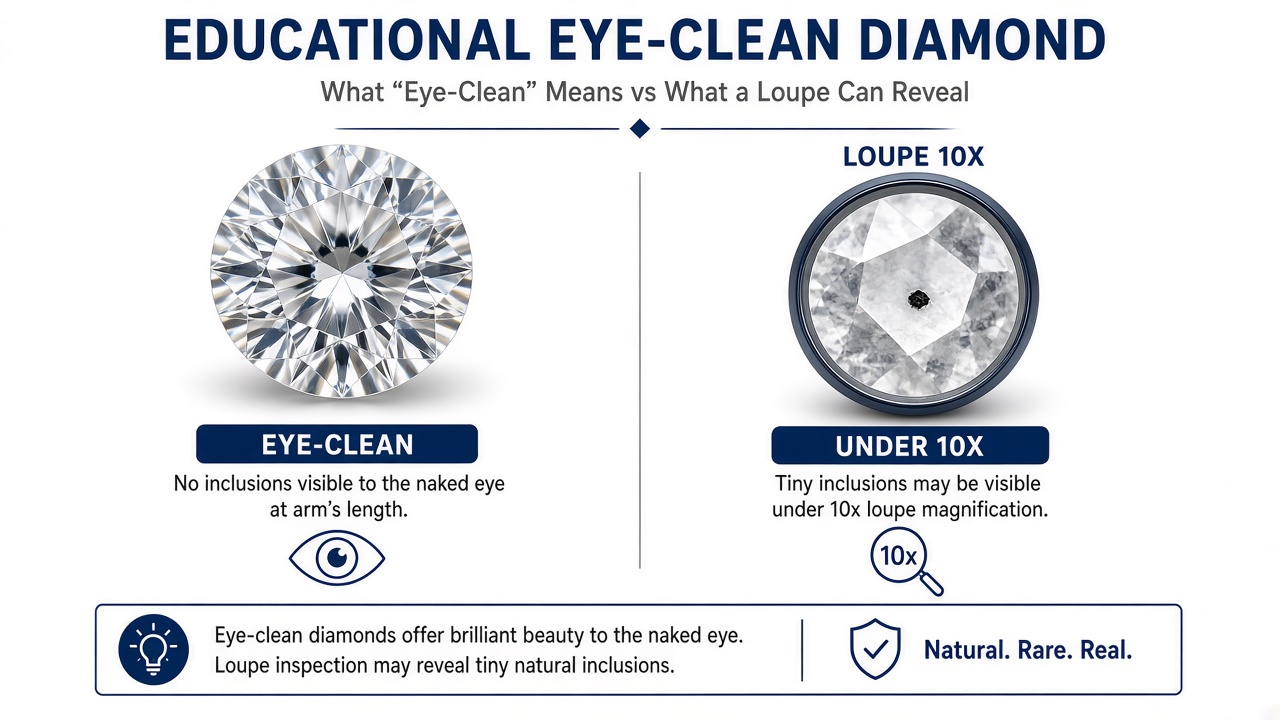
A 3 carat stone shows body color and inclusions more than a 1 carat stone of the same grade. If you were comfortable with I color at 1 carat, look again at 3 carats in the metal you will wear.
Clarity plots matter. An SI1 crystal under the table on a 3 carat round is not the same risk as a small feather on the girdle.
Natural 3 carat diamonds with strong grades are scarce, and the price reflects that. Lab-grown 3 carat diamonds make this size available at a much lower price, with the same need to read the certificate.
Filter around 3 carats, open measurements, and compare a short list. Do not buy the carat number alone.
Carat Mate lists certified loose diamonds for shoppers in the United States, Canada, the UAE, London, and Australia. Prices are in USD everywhere. We ship to the United States, Canada, the UAE, London, and Australia.