Guides
Yes. A lab-grown diamond is a diamond. It is crystallized carbon, not cubic zirconia, moissanite, or glass.
Diamond is carbon in a specific crystal structure. Lab-grown diamonds have that structure. They rank 10 on the Mohs scale and disperse light the way mined diamonds do. A jeweler’s loupe cannot separate them by sparkle.
Simulants are different materials. Moissanite and cubic zirconia can look bright and still fail a diamond test. A lab-grown diamond passes as a diamond because it is one.
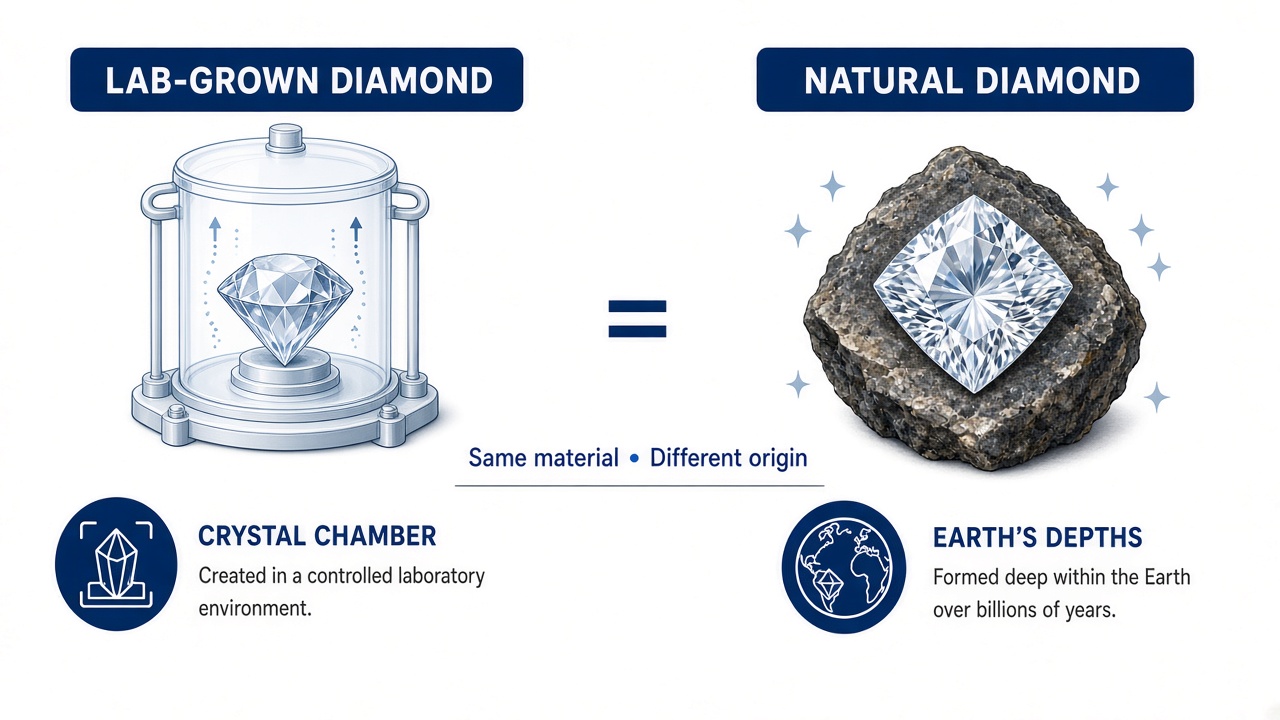
Growth leaves traces that standard magnification does not show. Gem labs use spectroscopy and related tests to tell laboratory-grown from natural. The report then says laboratory-grown, often with the growth method when the lab records it.
Many stones also carry a laser inscription on the girdle that includes the report number and a lab-grown disclosure. Match that inscription to the certificate before you rely on the grade.
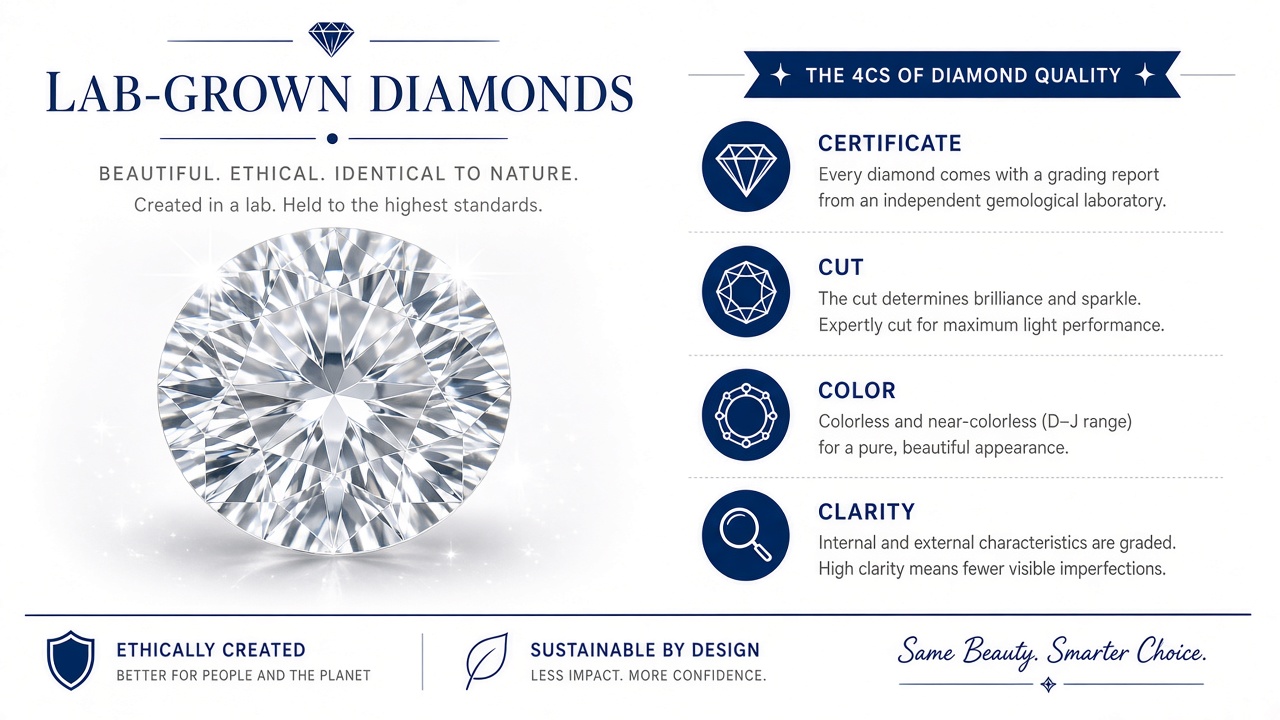
Origin does not pick your cut, color, or clarity. A poorly cut lab-grown diamond looks dull. A well-cut one looks like a well-cut diamond. Judge the stone on the 4Cs and the images.
Origin does change price and resale. Lab-grown diamonds cost less at the same grades and have a thin secondary market. That is an economic fact, not a statement about whether the crystal is diamond.
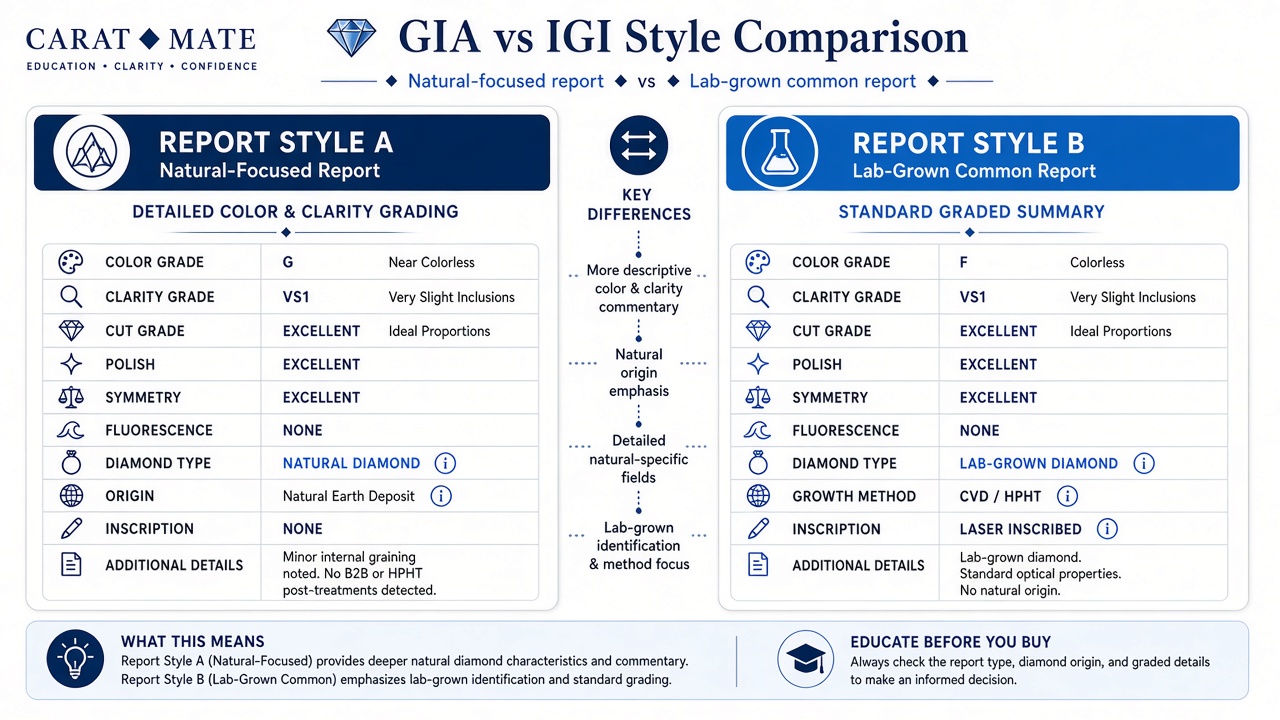
Lab-grown listings on Carat Mate are certified diamonds, separate from natural listings. The certificate is on the diamond page with the photo and 360° view.
If you want a mined stone, use the natural catalog. Both are diamonds. The report is how you know which one you are looking at.
Carat Mate lists certified loose diamonds for shoppers in the United States, Canada, the UAE, London, and Australia. Prices are in USD everywhere. We ship to the United States, Canada, the UAE, London, and Australia.