Guides
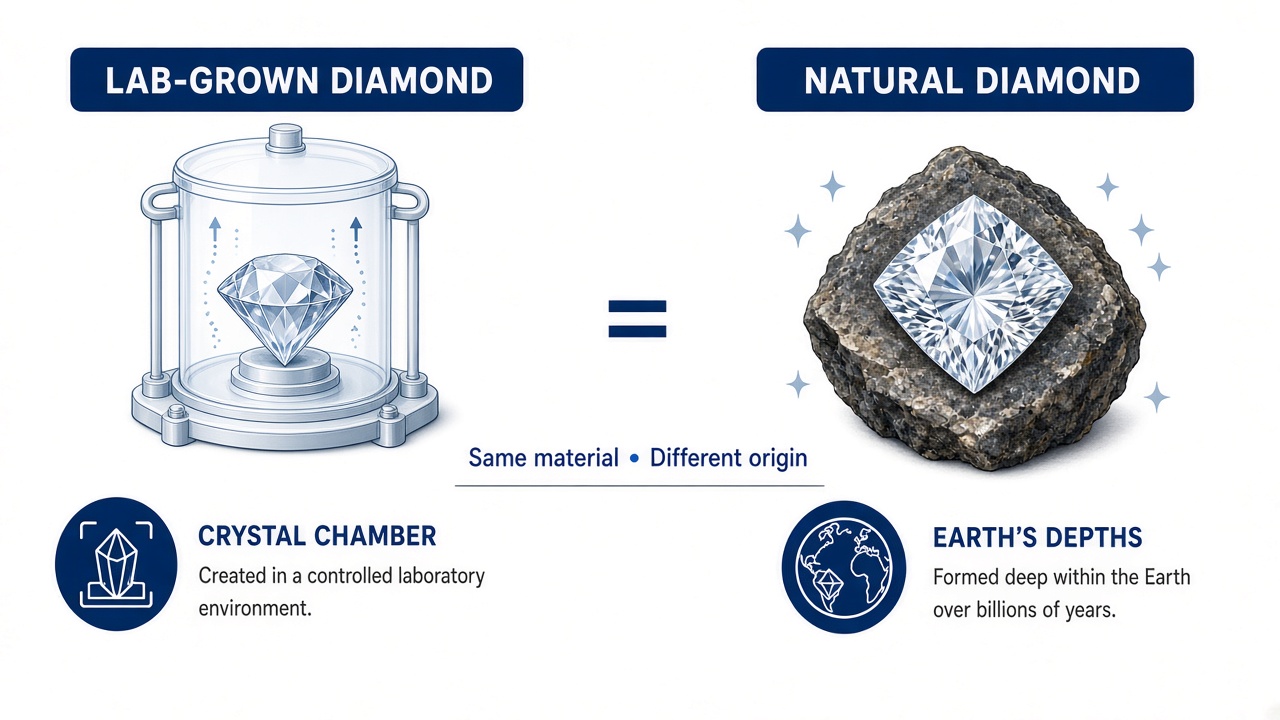
At the same carat, color, and clarity, a lab-grown diamond usually costs less than a natural diamond because the supply is manufactured, not mined.
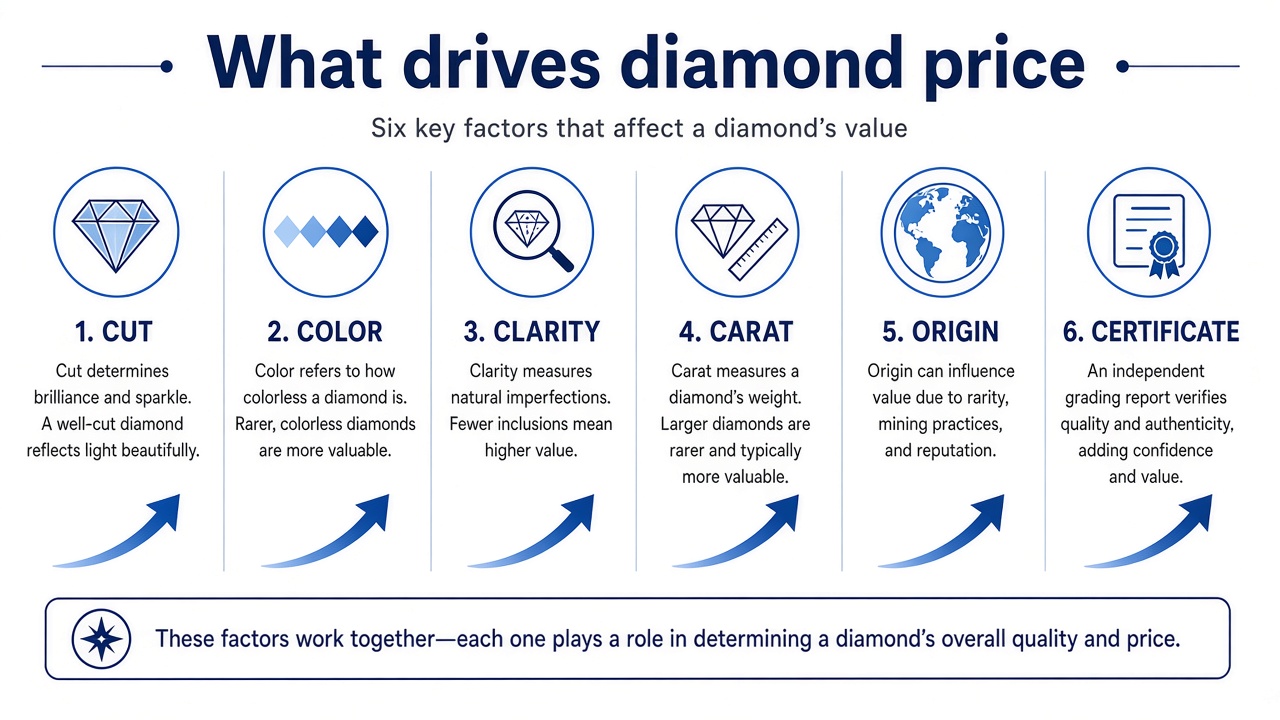
A lab-grown and a natural diamond can share a G color, VS1 clarity, and Excellent cut. The lab report describes those grades the same way. The price gap comes from how the rough is produced. Natural supply depends on mining. Lab-grown supply depends on reactor time, energy, and yield.
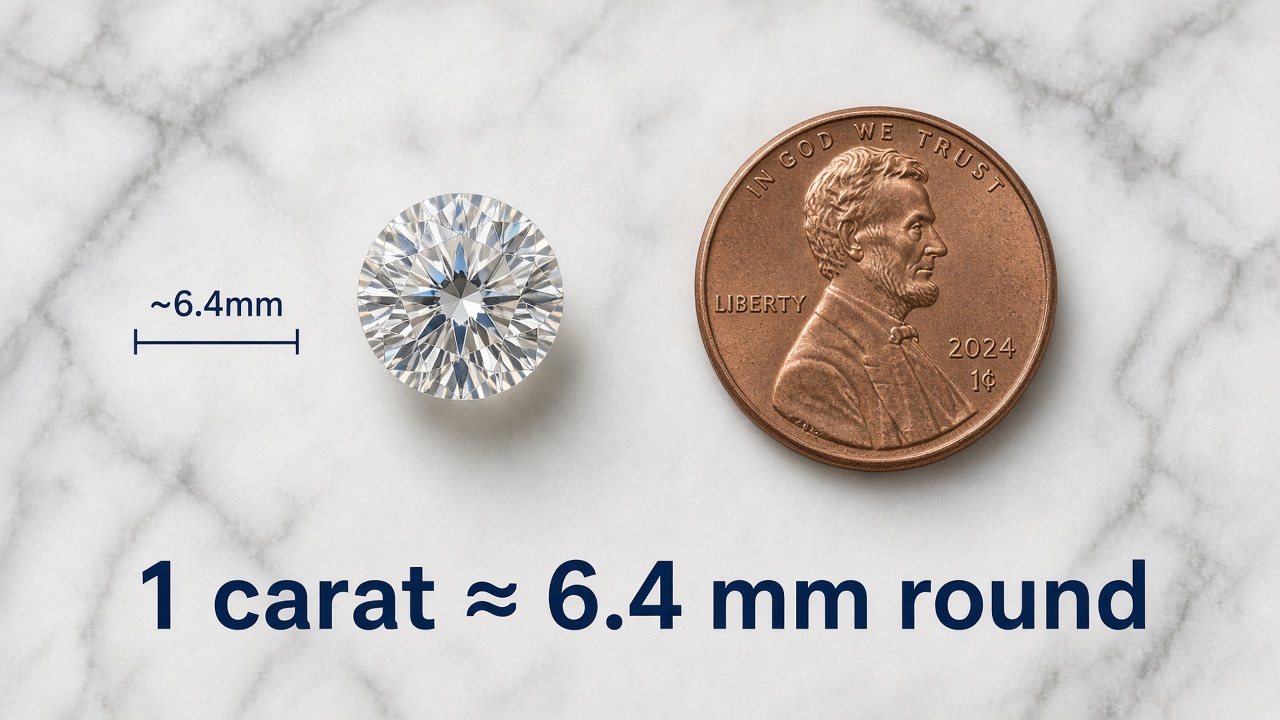
That is why the gap often widens as carat weight goes up. A large natural crystal is rare. A large lab-grown crystal takes more growth time, but it does not face the same rarity jump at 2 and 3 carats.
Do not compare a 1 carat I color SI2 with a 1 carat D color VVS1 and call the difference an origin premium. Match shape, carat, color, clarity, and cut, then look at the live price on each listing.
Whole-carat weights (1.00, 2.00) often cost more per carat than stones just under the line, especially for natural diamonds. Check 0.90 against 1.00 if the visible size change is small.
Neither origin is a liquid investment. Natural diamonds have more resale interest, and that resale is still a wholesale bid, not the price you paid. Lab-grown resale is weaker because replacement cost keeps falling.
Buy the look you want at the capital you want to spend. Use the saved difference for the setting, a larger carat, or something else. Do not underwrite the purchase as an asset that will hold its retail price.
Carat Mate lists certified lab-grown and natural loose diamonds in one catalog, priced in USD. Open two stones with close specifications and read both certificates before you decide.
The live price on the listing is the price to compare. Grades on a screenshot without a report number are not a quote.
Carat Mate lists certified loose diamonds for shoppers in the United States, Canada, the UAE, London, and Australia. Prices are in USD everywhere. We ship to the United States, Canada, the UAE, London, and Australia.