Guides
A loose diamond price is the stone. A finished ring price is the stone plus the setting, and those two numbers should not be compared as if they were the same product.
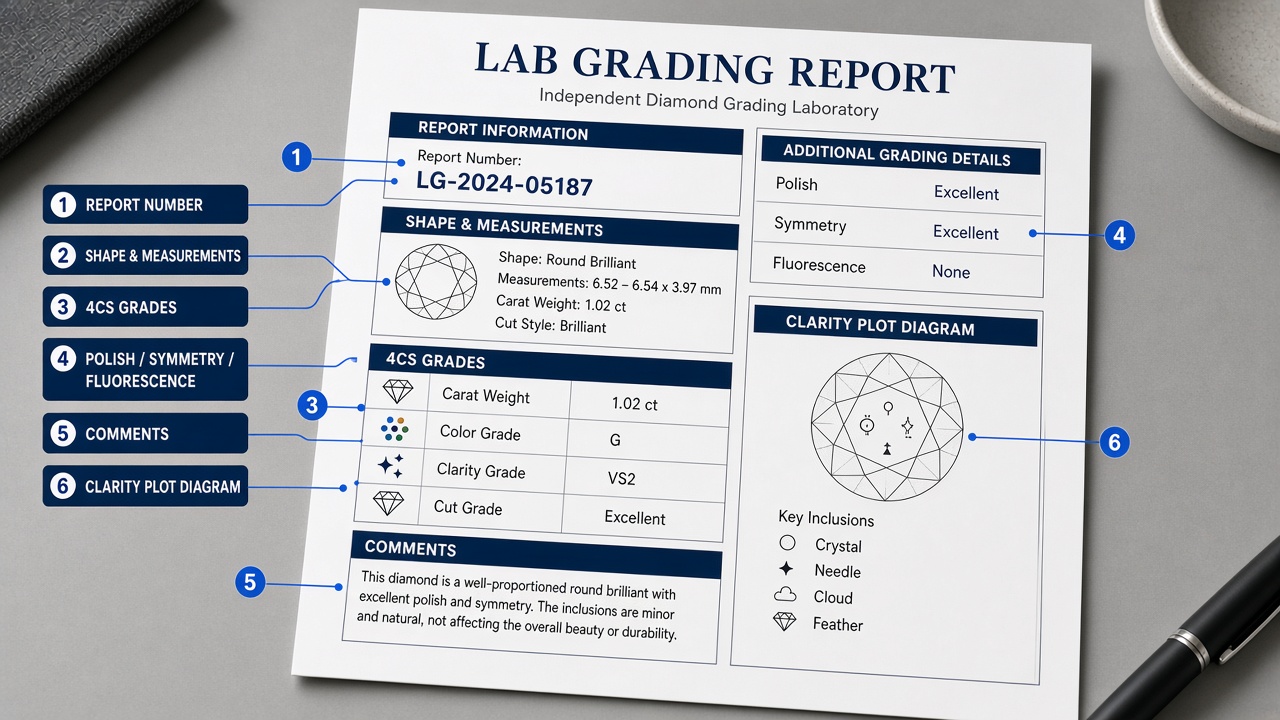
Loose inventory is one certified diamond. You can see carat, color, clarity, cut, and the lab. A finished ring folds metal, labor, and sometimes side stones into one tag, which makes it harder to tell what the center diamond actually costs.
If two rings are the same sticker price, the centers can still be a carat apart. The tag does not tell you that. The certificate does.
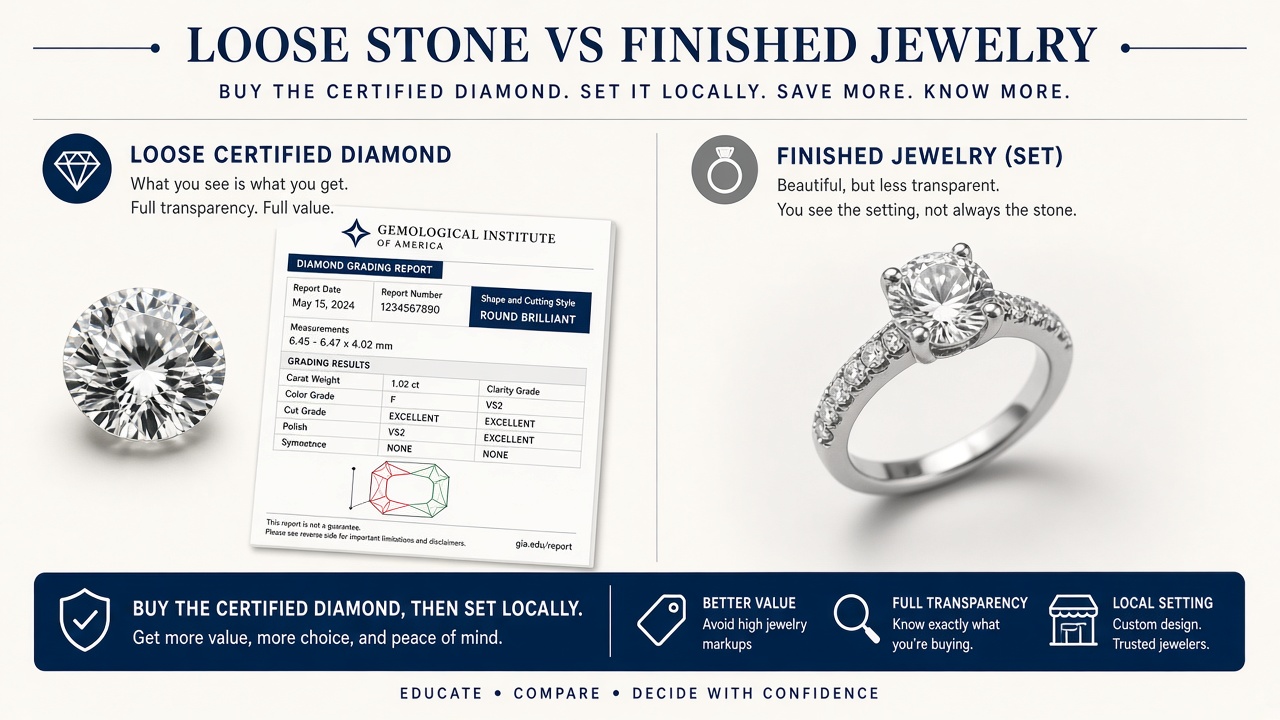
Buy loose when you care about a specific grade and want to compare several stones. You can spend the budget on cut and carat, then choose a simple setting instead of paying for a mounting you did not pick.
Carat Mate is built for that path. Engagement-ring URLs search center stones. They are not a case of completed rings.
A finished ring is simpler if you want to walk out with a complete piece and you accept the center the jeweler already chose. You trade specification control for convenience.
Even then, ask for the center’s report. A ring without a diamond certificate is a style purchase, not a graded diamond purchase.
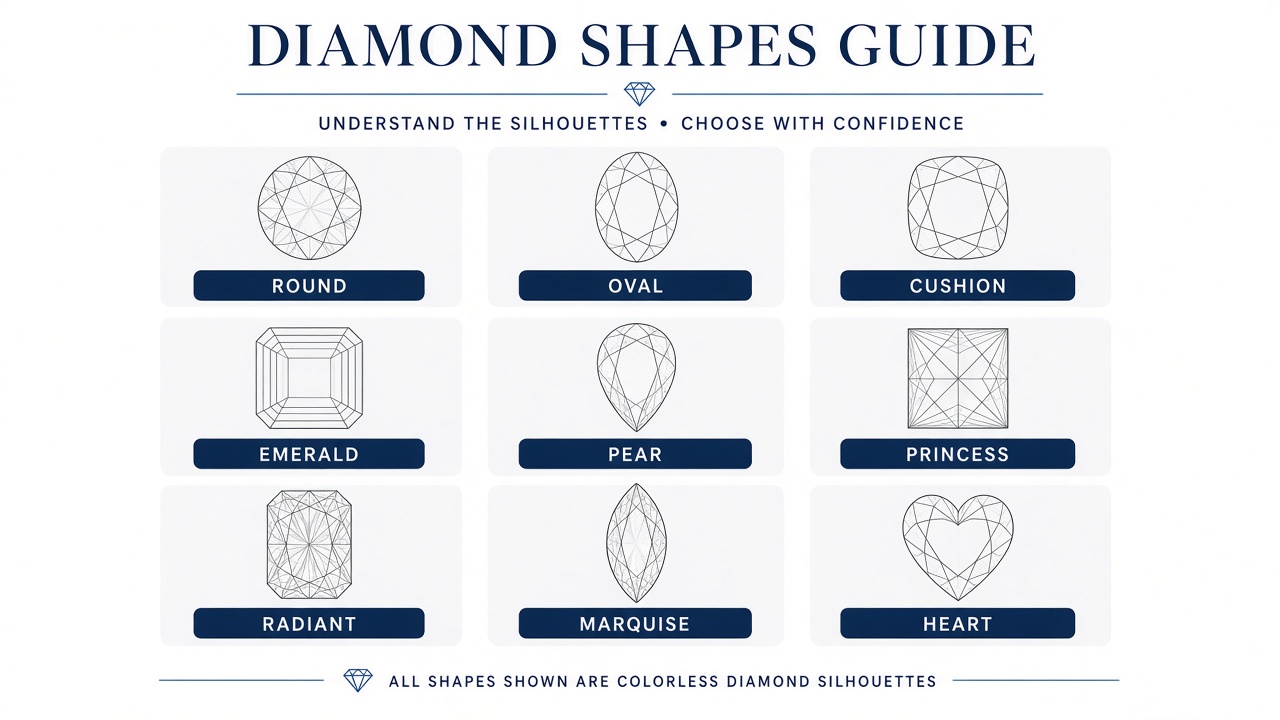
Put the loose diamond’s price next to a ring only after you know the ring’s center carat, color, clarity, and lab. Then the gap is the setting, not a mystery discount.
Do not assume the ring is a better deal because the store bundled it. Unbundle the stone first.
Carat Mate lists certified loose diamonds for shoppers in the United States, Canada, the UAE, London, and Australia. Prices are in USD everywhere. We ship to the United States, Canada, the UAE, London, and Australia.