Guides
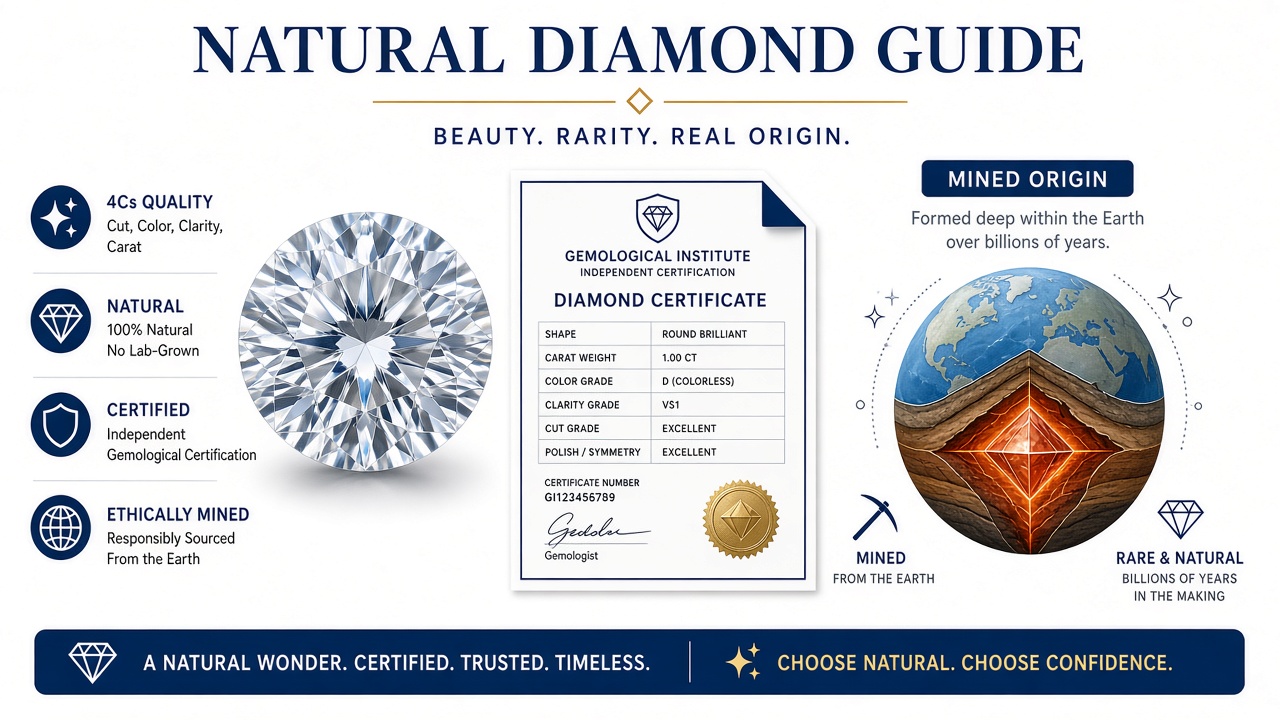
A natural certified loose diamond is a mined diamond sold unset, with a lab report that grades that specific stone.
Natural diamonds vary. Two 1 carat rounds with different color and clarity are not substitutes. The certificate is how you know which stone you are pricing. GIA is the usual reference for natural diamonds. IGI reports also appear on loose inventory.
Match the report number to the inscription. If the numbers differ, you are not looking at the stone the grade describes.
Carat weight, color, and clarity move natural prices faster than they move lab-grown prices. Crossing 1.00 ct, or moving from SI1 to VS2, can cost more than the change you see across a table.
Cut still comes first on a round. A Fair cut D/VVS1 will look worse than an Excellent G/VS2. Spend on cut, then decide how much colorless and how much clean you want to pay for.
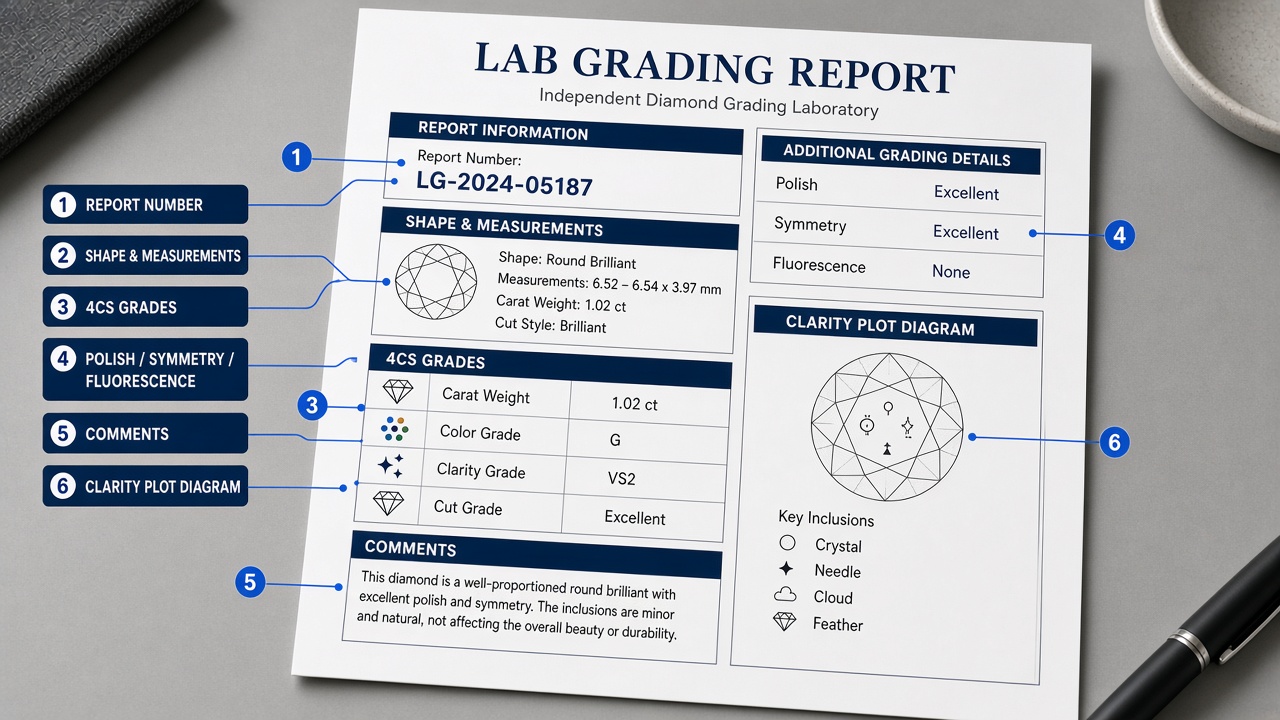
A loose diamond lets you read table, depth, and clarity plot without a setting covering the girdle. You can also compare several natural stones at one carat before anyone builds a ring around one of them.
Carat Mate sells the certified stone. Engagement-ring pages are searches for a center stone, not a tray of finished rings.
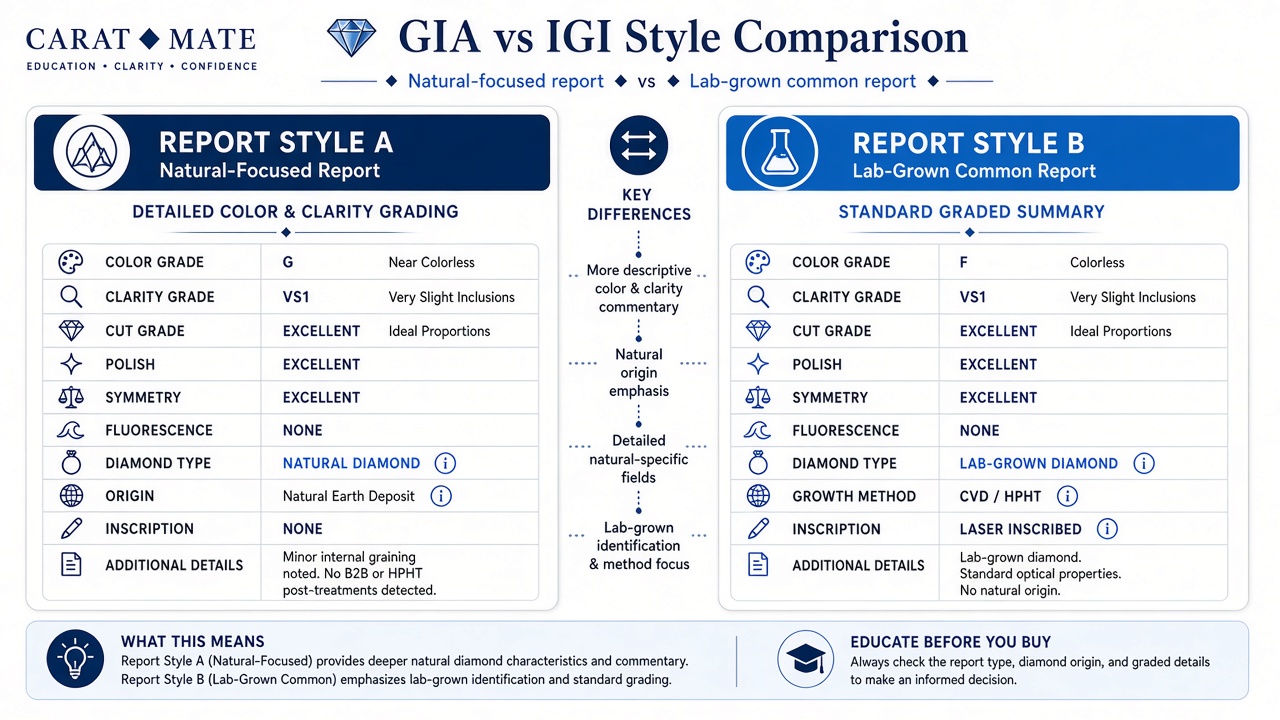
Pick shape, then a carat band, then a cut floor for rounds. Limit color to a range you have compared in photos (often G–I in yellow gold, F–H in white metal). Keep clarity at VS2 or better if you do not want to judge inclusions, or include SI1 if you will watch the video.
Request the exact natural diamond. Live viewing and the certificate are how you confirm it before you pay.
Carat Mate lists certified loose diamonds for shoppers in the United States, Canada, the UAE, London, and Australia. Prices are in USD everywhere. We ship to the United States, Canada, the UAE, London, and Australia.