Guides
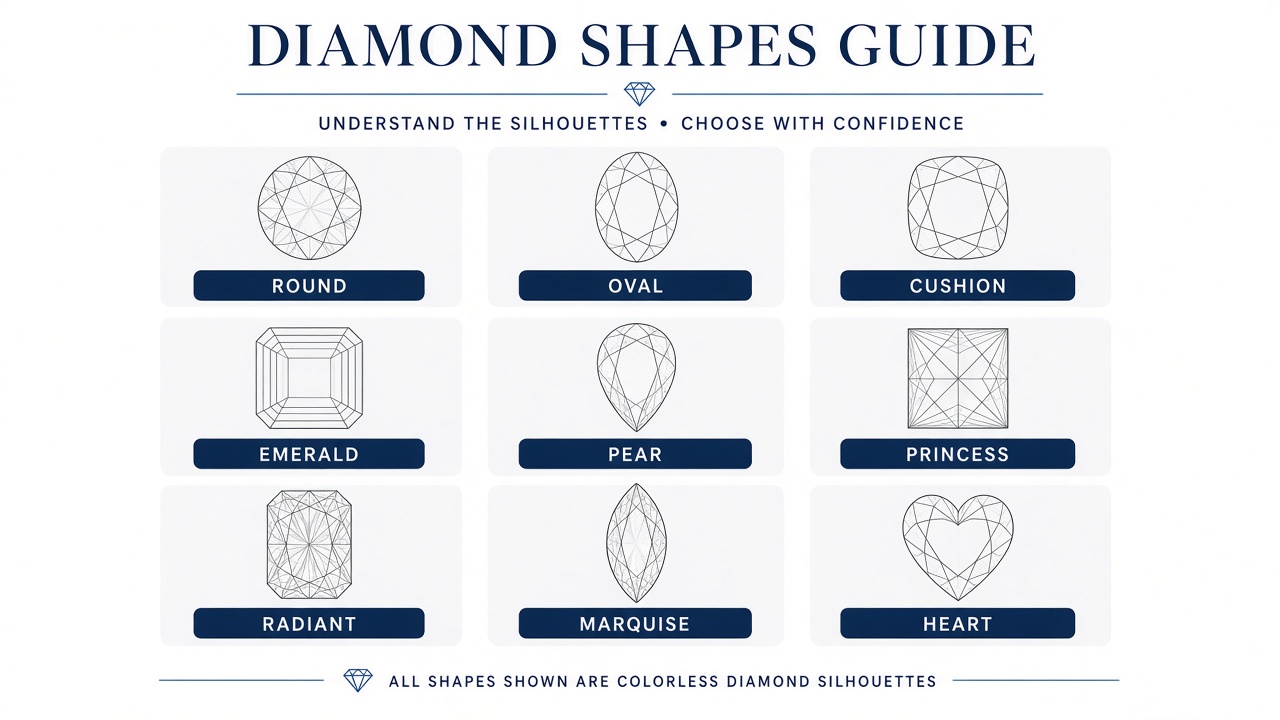
A pear shaped loose diamond is round at one end and pointed at the other. The length-to-width ratio decides whether it looks short, classic, or skinny.
Divide length by width. A ratio around 1.40–1.50 looks balanced to most people. Near 1.30 the pear looks chubby. Above 1.70 it looks narrow. There is no ISO standard. There is the outline you prefer, and the certificate measurements tell you the ratio before you rely on a photo angle.
Compare two pears at the same carat with different ratios. The longer one faces up larger even though the weight matches.
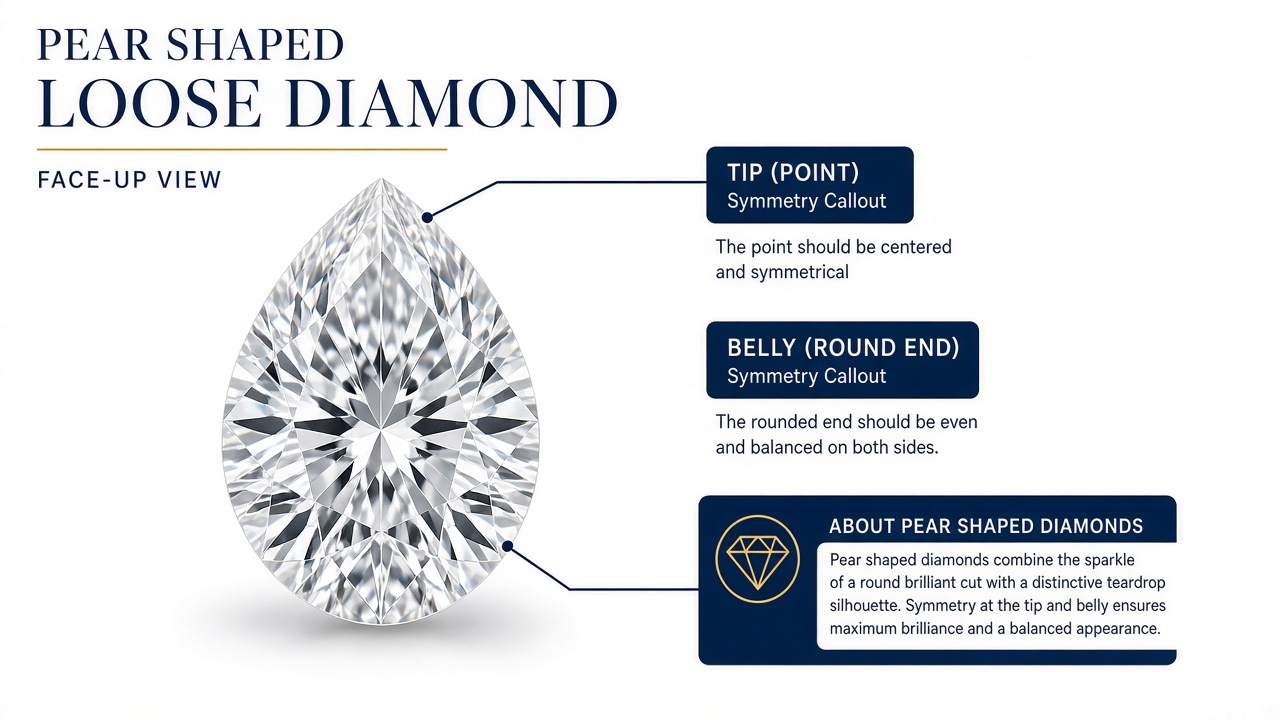
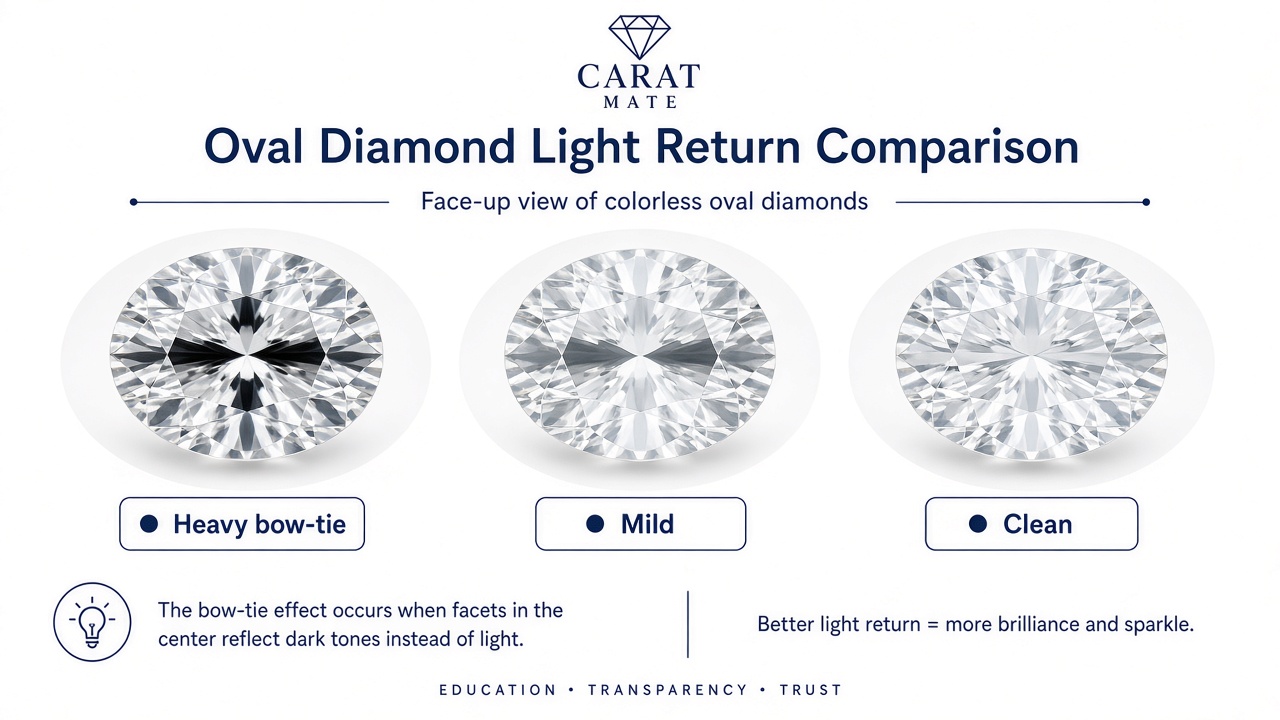
A bow-tie is a dark band across the middle. Almost every pear shows some. A thick, black bow-tie is a reject. A faint one is normal. You can only judge it on video while the stone turns.
The pointed tip should be centered on the rounded end, not twisted. An off-center tip makes the whole outline look crooked once it is set.
Inclusions near the tip are risky because that area is thin, and inclusions under the table are the ones you see. Wings of the pear can hide small marks better than the center.
Use VS2 as a floor if you want less inspection, or SI1 when the video is clearly clean through the middle.
Open pear inventory, narrow the carat range, and read length and width on each shortlisted certificate. Calculate the ratio or compare the numbers directly. Then watch for bow-tie.
The pear diamond page is the live list. The ratio you like is a personal cutoff, so do not let a single “ideal” number throw out a stone whose video looks right.
Carat Mate lists certified loose diamonds for shoppers in the United States, Canada, the UAE, London, and Australia. Prices are in USD everywhere. We ship to the United States, Canada, the UAE, London, and Australia.