Guides
D is the top of the colorless range. G is the top of near colorless. The report difference is two letters. The face-up difference is smaller than the price difference, especially on natural diamonds.
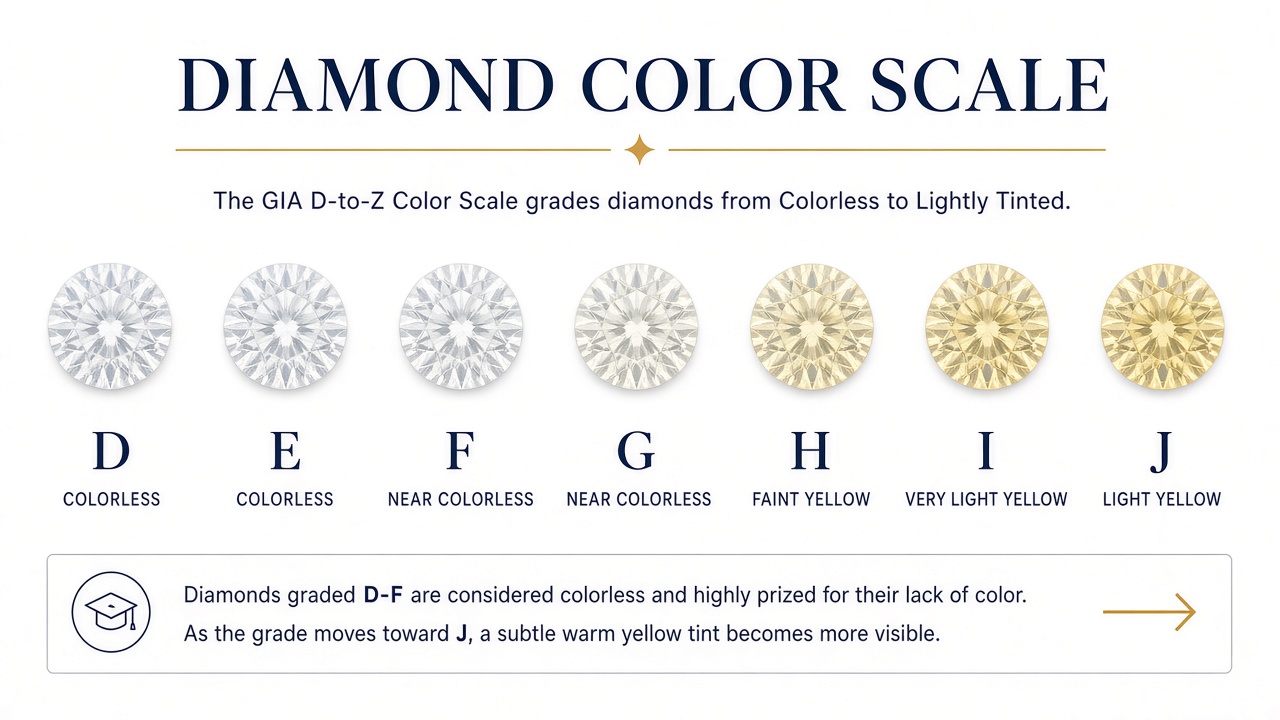
D, E, and F are colorless. Graders see no color in the stone when it is compared with masters. G and H are near colorless. A trained grader can see a trace of color; most wearers, looking at one stone in a setting, see a white diamond.
Neither grade describes sparkle. A G color Excellent cut will look livelier than a D color Fair cut.
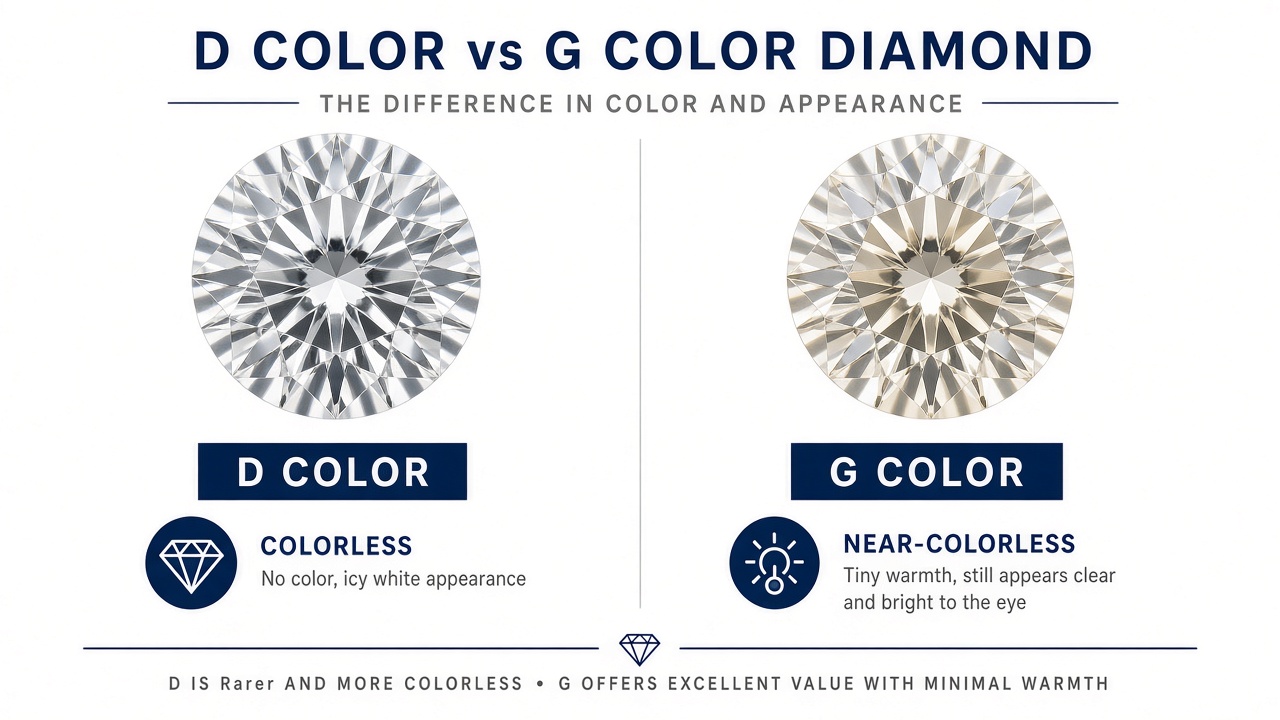
Side by side, on loose stones, in daylight, a careful look can separate them. In a finished ring, one at a time, many people cannot. The gap shows more as carat weight rises and in white metal.
If you only look at stones in yellow gold under 1.5 carats, G is usually the rational buy. If you want the certificate to say colorless and you are comparing stones over 2 carats in platinum, look at D–F seriously.
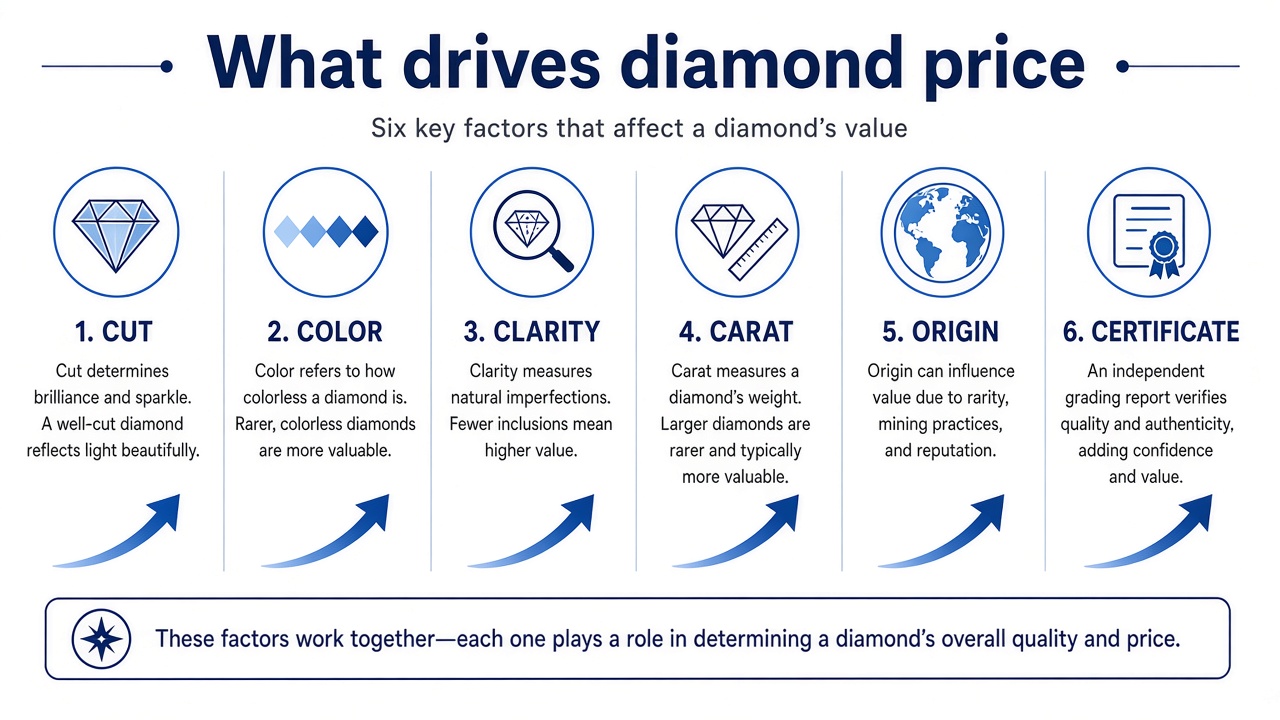
On natural diamonds, D commands a clear premium over G at the same clarity and cut. You are paying for rarity at the top of the scale. On lab-grown diamonds the premium is often modest, so D is easier to justify if you want it.
Compare live listings with clarity and cut held constant. That is the only way to see what those two letters cost today.
Open a D and a G in the same shape and carat on Carat Mate. Look at them in the photos before you read the prices. If you cannot see a difference you care about, buy the G and keep the cut high.
If you can see it and you will think about it, buy the higher color. The wrong answer is paying for D out of habit.
Carat Mate lists certified loose diamonds for shoppers in the United States, Canada, the UAE, London, and Australia. Prices are in USD everywhere. We ship to the United States, Canada, the UAE, London, and Australia.