Guides
A princess cut is a square or rectangular brilliant with pointed corners and chevron-shaped facets. It is a loose-diamond shape, not a round with the sides cut off.
Most princess cuts are square. Some are slightly rectangular. The facet pattern is brilliant, so the stone is meant to sparkle rather than show the hall-of-mirrors look of an emerald cut.
Chevron facets are the V-shaped facets you see when you look through the crown. A bright princess returns light across those facets. A dull one looks glassy or dark in the corners. The video shows this faster than a cut grade, because princess cut grades are less standardized than round grades.
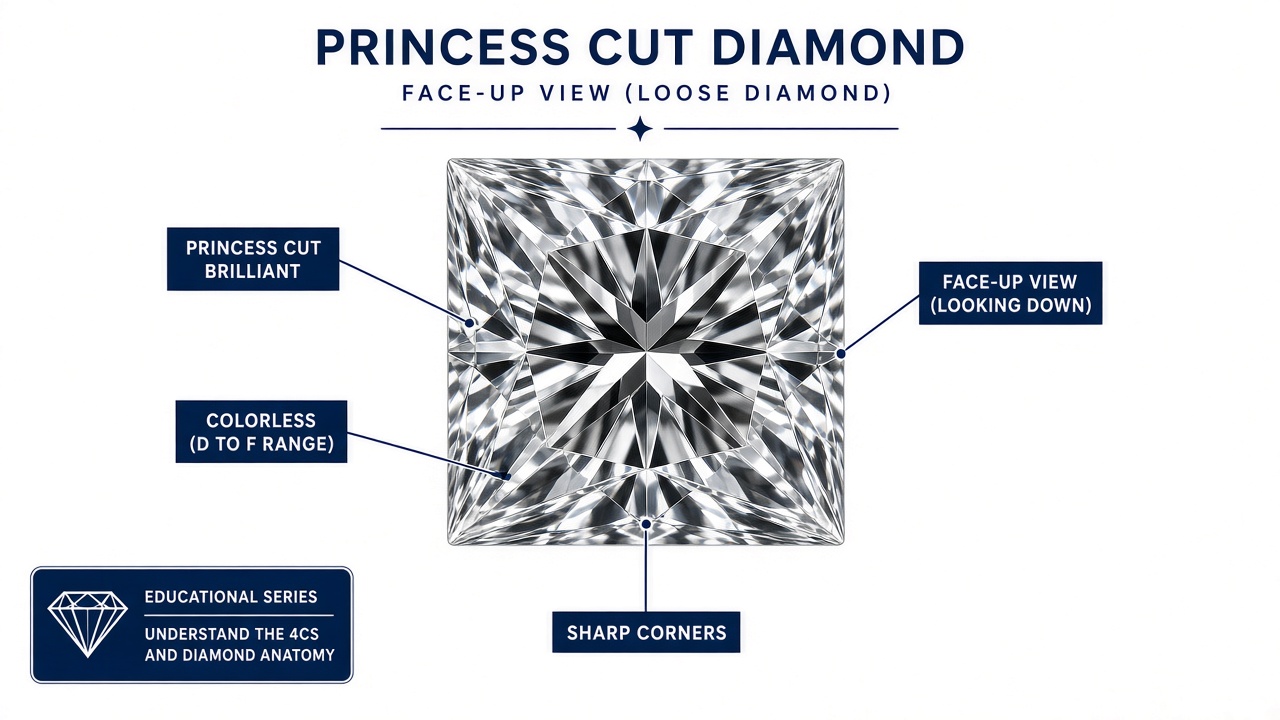
The corners are thin. They chip more easily than a round’s girdle if the setting does not protect them. When you plan a mounting, the head should cover the corners. That is a setting question, and it is why people inspect a loose princess before they commit to a fragile peg head.
On the loose stone, look for chips already on the corners in the photos. A chip is not the same thing as an internal inclusion.
Princess facets break up inclusions, but they do not hide a large dark crystal. VS2 is a comfortable floor. SI1 can work if the video is clean.
Color reads similarly to a round at the same size. Compare G and I in the metal you will use rather than memorizing a cutoff.
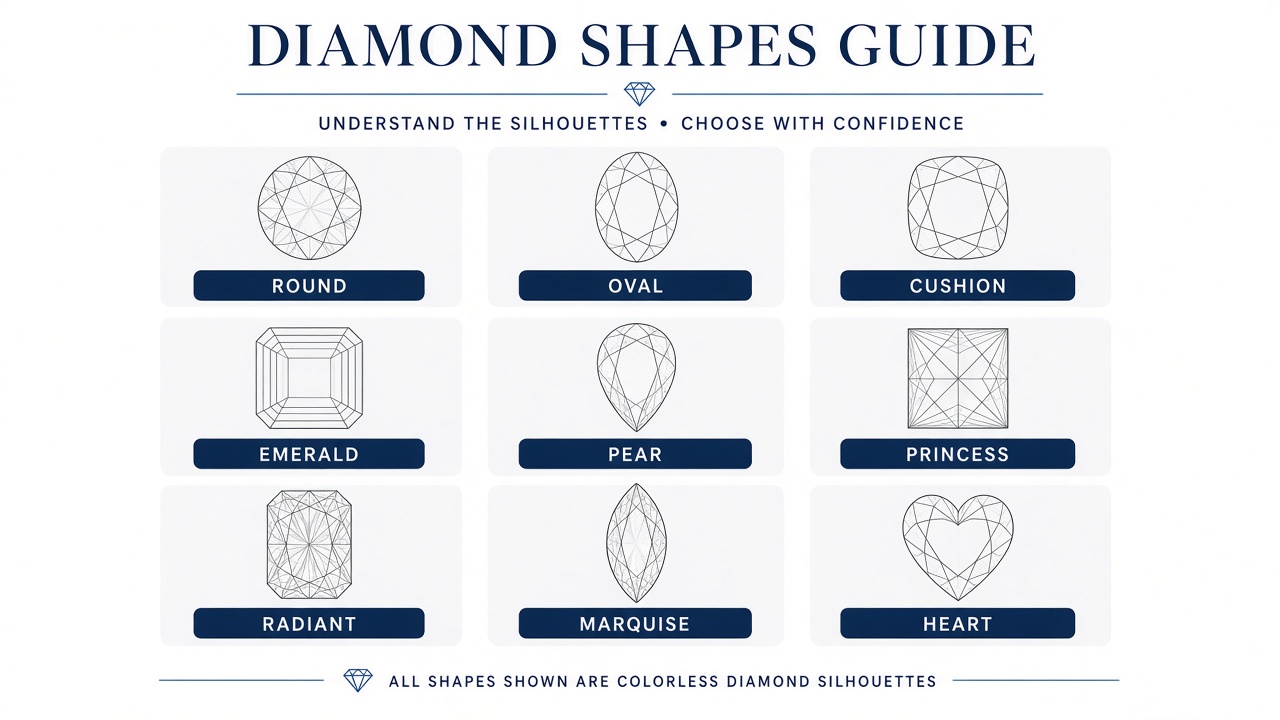
Filter shape to princess, then carat and price. Compare length and width so you know whether the stone is square. A 1.10 length-to-width ratio is visibly rectangular. A ratio near 1.00 is square.
Request the specific princess whose corners and facet pattern you have already watched.
Carat Mate lists certified loose diamonds for shoppers in the United States, Canada, the UAE, London, and Australia. Prices are in USD everywhere. We ship to the United States, Canada, the UAE, London, and Australia.