Guides
A round loose diamond is priced on cut as much as on carat. Symmetry and polish are how the lab describes whether that cut was finished cleanly.
On a round brilliant, cut is the grade that decides brightness and fire. Excellent and Ideal cuts return light. Fair and Poor cuts look smaller and duller even when color and clarity are high.
Set the cut filter before you sort by price. Otherwise the cheapest rounds are often the weakest cuts.
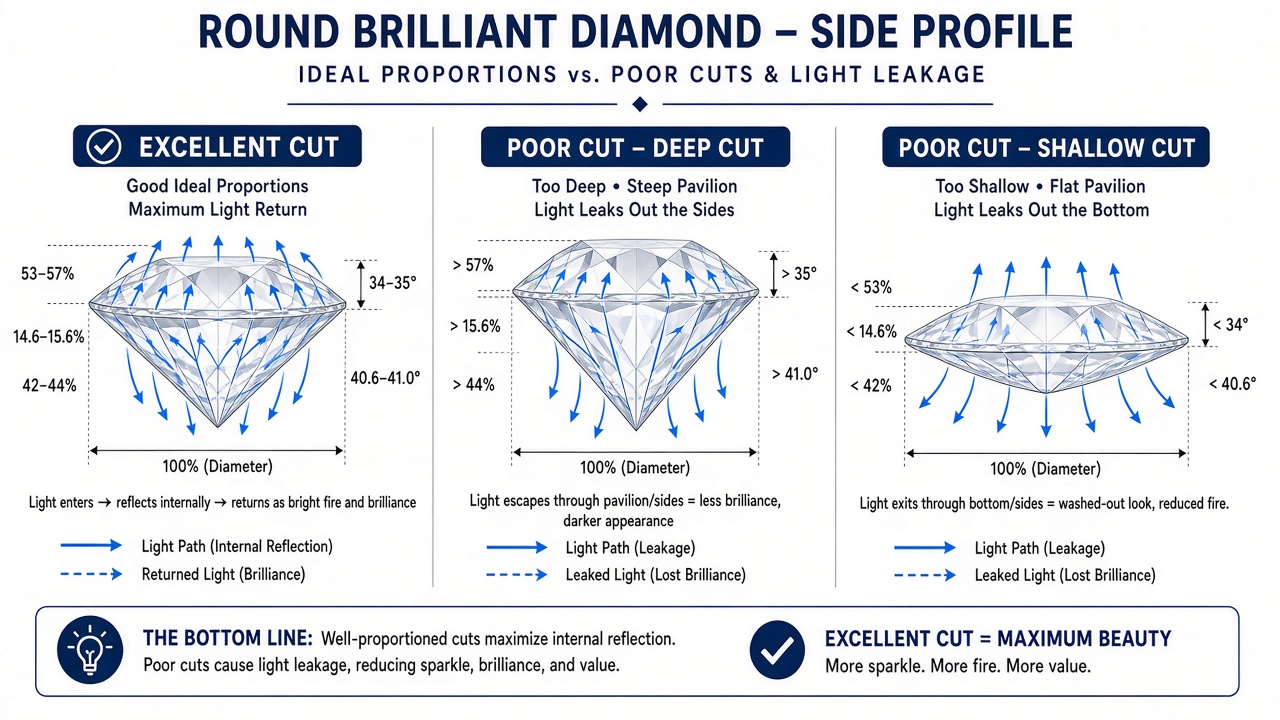
Symmetry is how well opposite facets match. Polish is the quality of the surface. Both are graded separately from the overall cut grade. Excellent or Very Good on both is what you want alongside an Excellent cut.
A symmetry issue can show as a facet pattern that looks uneven in the video, not only as a word on the report. If the 360° view looks lopsided, do not talk yourself into the grade.
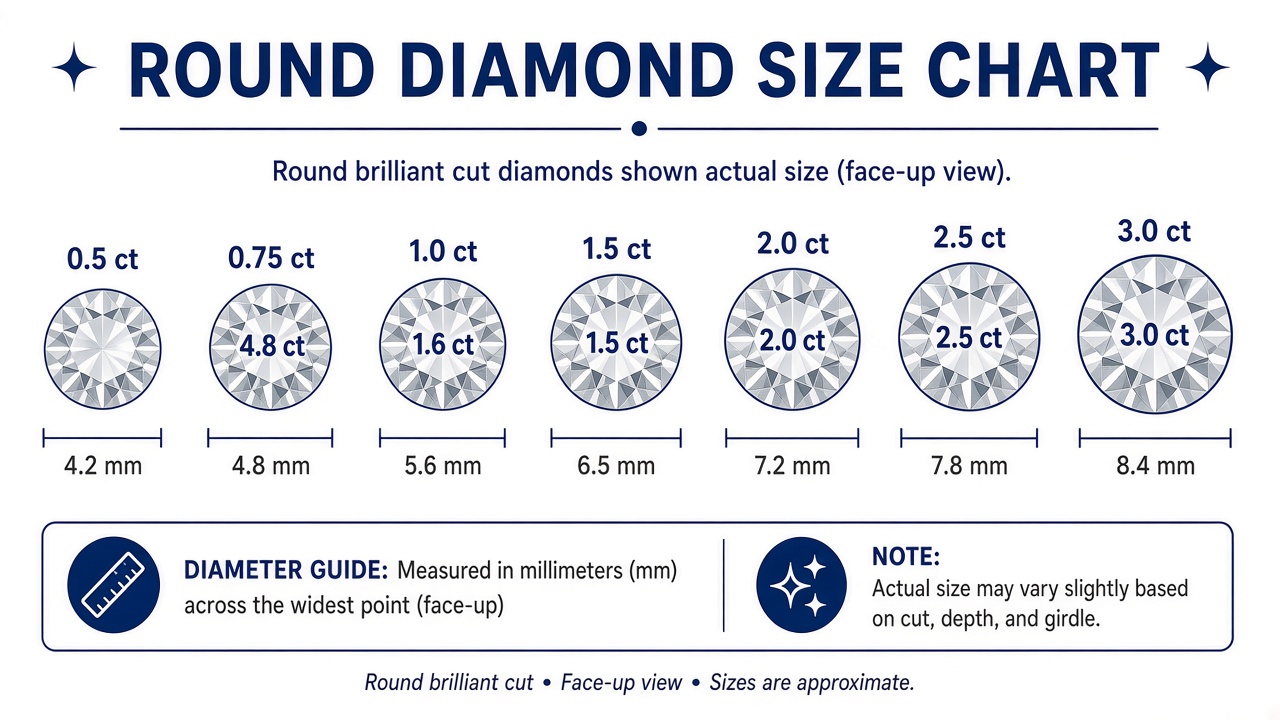
Table and depth percentages, crown and pavilion angles, and the millimeter measurements sit on the certificate. They are the inputs to the cut grade. You do not need to re-grade the stone if the lab already called the cut Excellent and the video looks bright.
Do watch for a very large table that looks glassy, or a deep pavilion that hides weight. Those show up in the image even when you are not calculating angles.
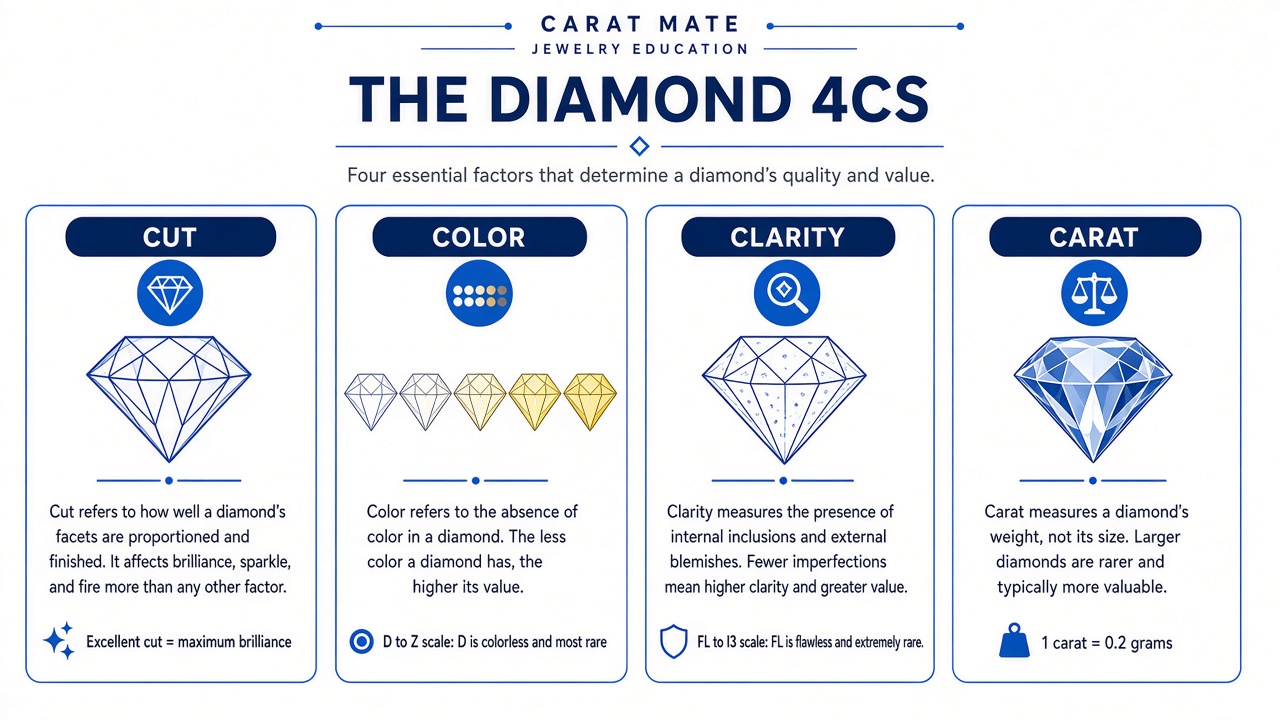
Filter round, your carat band, and Excellent cut. Then compare color and clarity inside that set. The round page on Carat Mate is the inventory, not a stock photo.
Request the stone whose report you read. Symmetry grades are meaningless if the diamond that arrives is a different one.
Carat Mate lists certified loose diamonds for shoppers in the United States, Canada, the UAE, London, and Australia. Prices are in USD everywhere. We ship to the United States, Canada, the UAE, London, and Australia.