Guides
An eye-clean diamond is one whose inclusions you cannot see face-up, without magnification, at a normal reading distance.
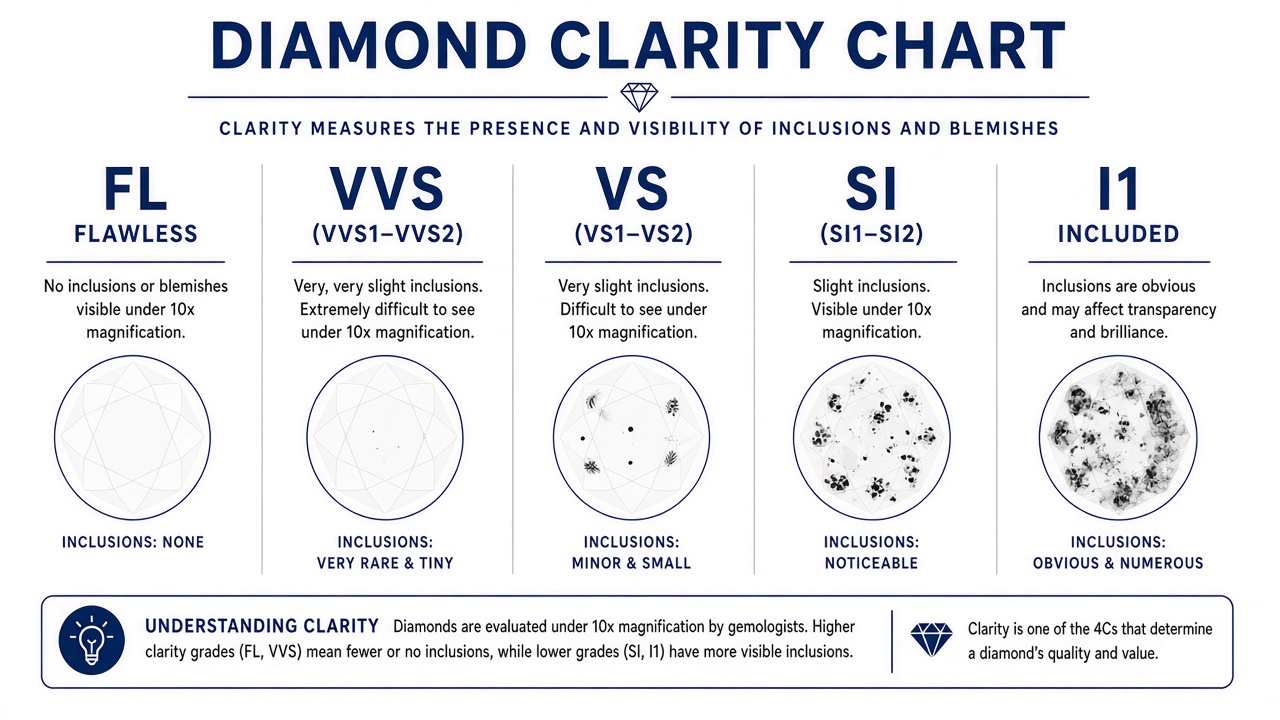
No lab grade is named “eye-clean.” Graders work at 10×. You wear the diamond at arm’s length. A VS1 and an SI1 can both be eye-clean, and an SI1 can fail, depending on where the inclusion sits and how dark it is.
White or transparent crystals hide better than black ones. Edge inclusions hide better than table inclusions.
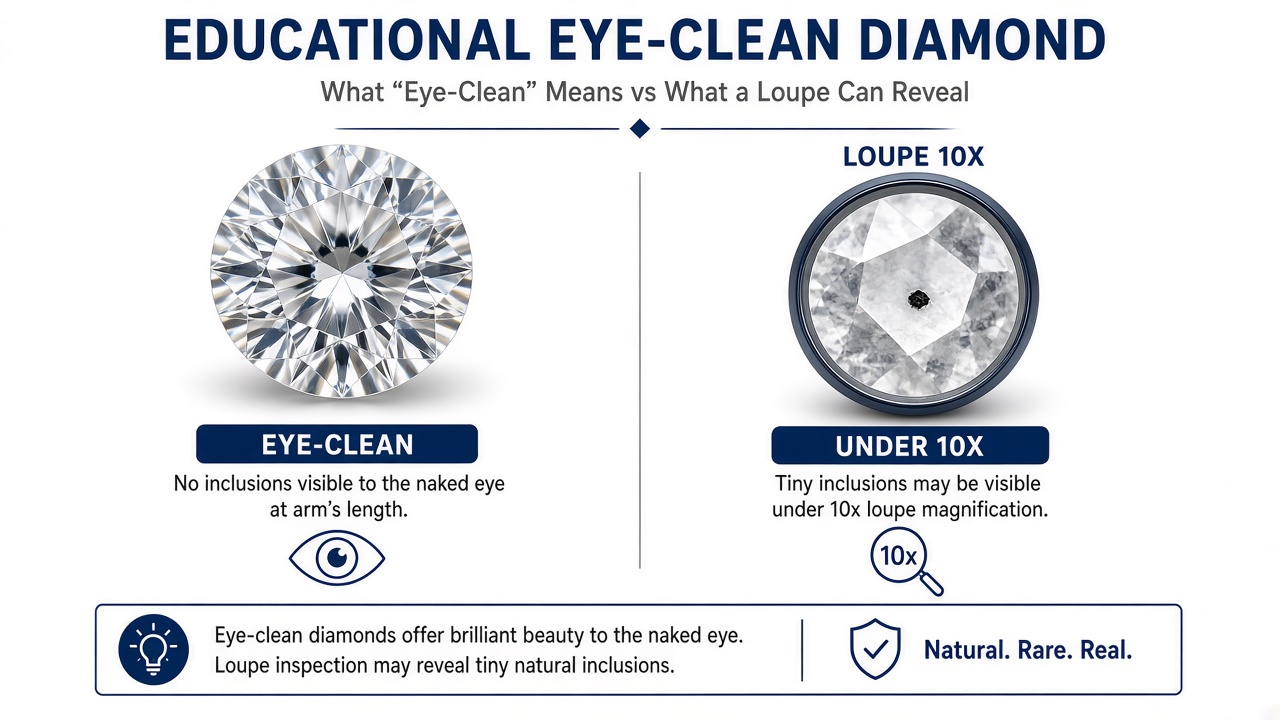
If you do not want to inspect stones, filter VS2 and better. That floor is the usual shortcut to eye-clean rounds and ovals.
If you will watch the 360° view, include SI1. Reject the stone when you can find the inclusion in a few seconds on a phone screen. That is the test that matters.
Larger carats make the same inclusion easier to see. A mark that disappears at 0.70 ct can show at 2.00 ct.
Step cuts (emerald, Asscher) and some pears show more than rounds. Do not copy a round’s SI1 assumption onto an emerald cut.
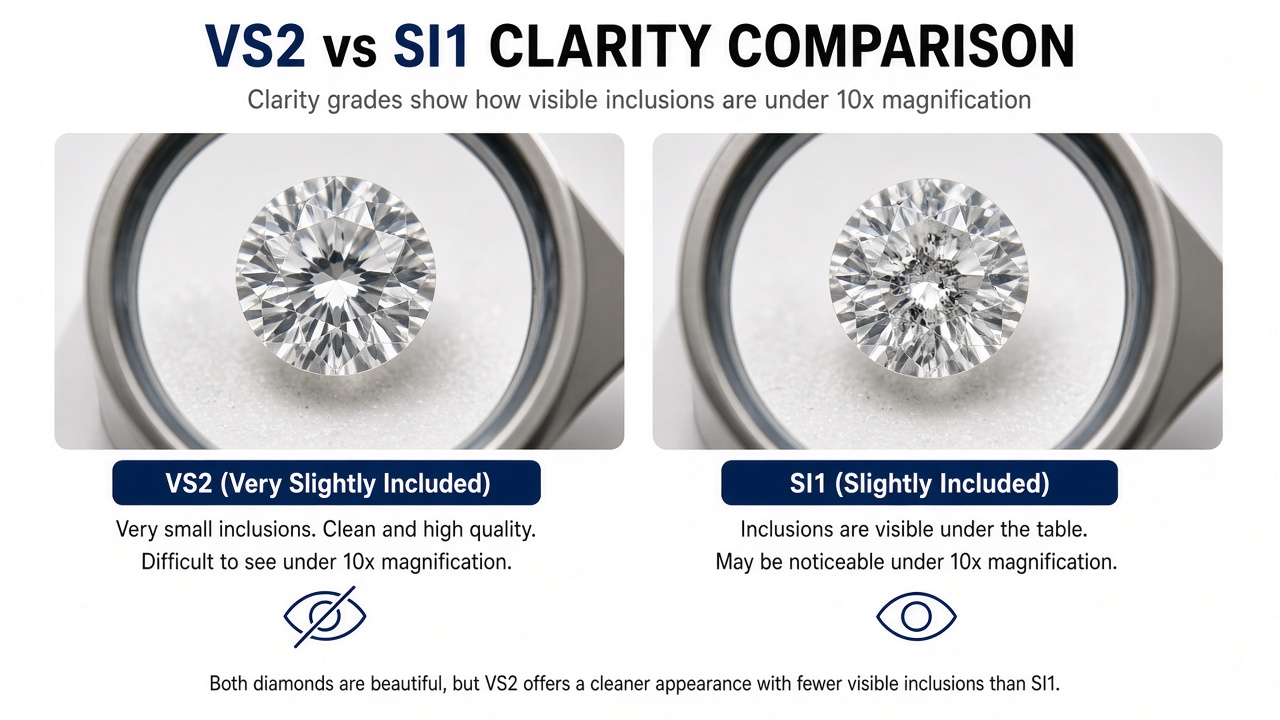
Open the clarity grade, then the video, then the plot if the lab provided one. Eye-clean is a property of that diamond, not of the grade printed beside it.
When you request the stone, you are asking to proceed on the diamond you already inspected, not on a promise that “SI1s are eye-clean.”
Carat Mate lists certified loose diamonds for shoppers in the United States, Canada, the UAE, London, and Australia. Prices are in USD everywhere. We ship to the United States, Canada, the UAE, London, and Australia.