Guides
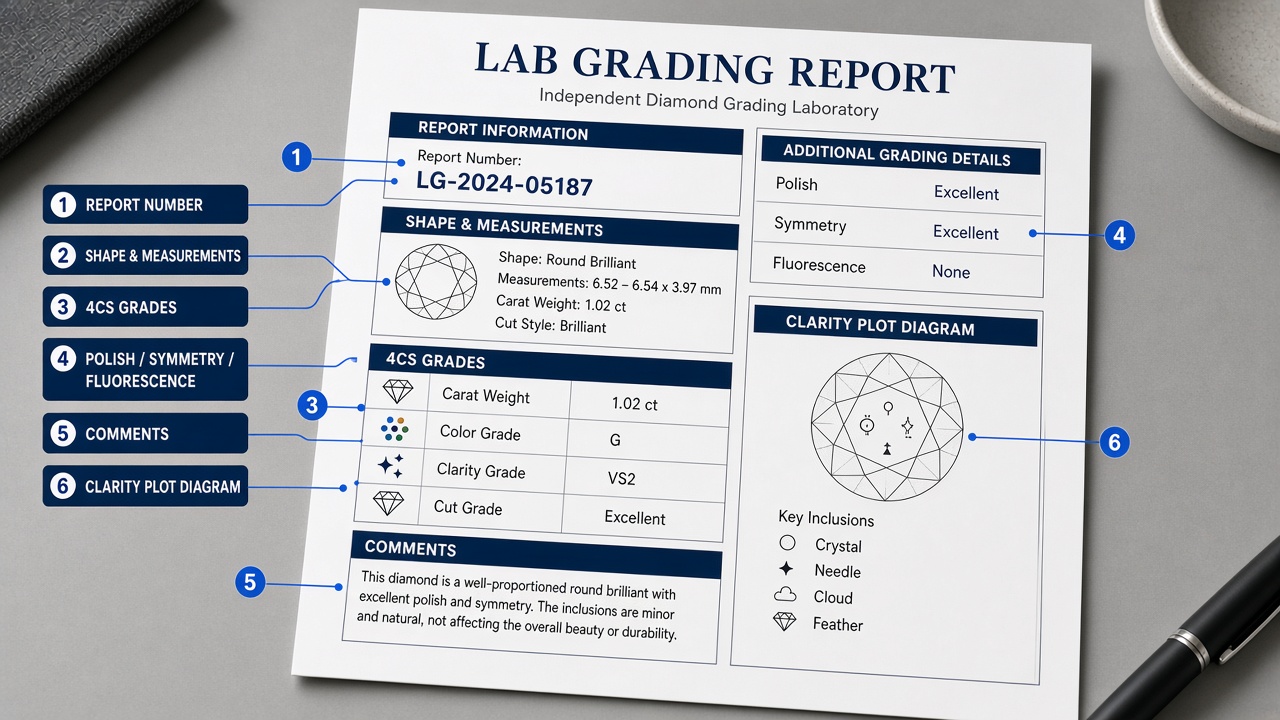
A certificate is the independent report for one diamond. Learn the fields that matter, then match the report number to the listing before you request the stone.
Open the certificate PDF from the listing. Confirm the report number on the document matches the number on the product page (and the girdle inscription when shown). If those do not match, stop — you are not looking at the report for that stone.
Shape, measurements (length × width × depth in mm), and carat weight should also agree with the listing. Small rounding differences happen; a different shape or a large carat mismatch does not.
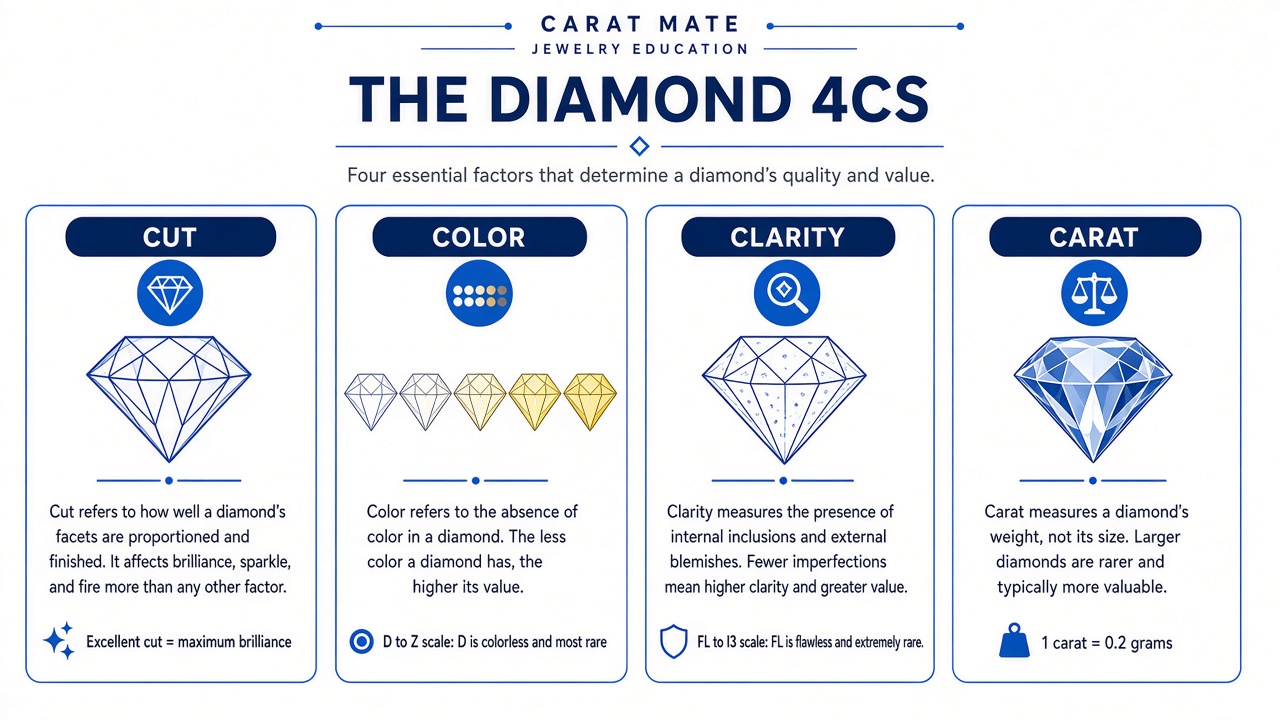
Cut (when graded), color, clarity, and carat describe the stone. For round brilliants, cut has the largest effect on sparkle. Color and clarity are face-up grades — always confirm with the photo and 360° video when available.
Carat is weight, not face-up size. Two 1.00 ct diamonds can look different if one is deep and the other is spread.
Polish and symmetry are finish grades. Excellent or Very Good on both is a practical floor for a center stone.
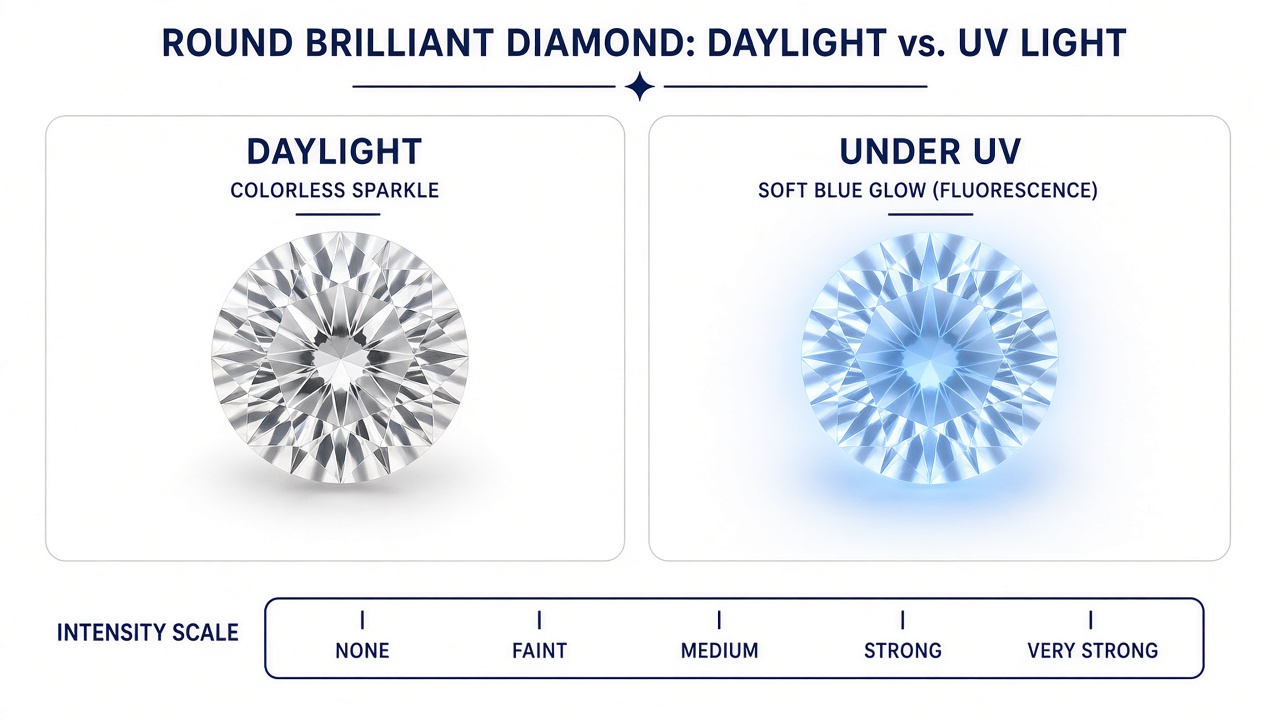
Fluorescence is how the diamond reacts under UV. None and Faint are common. Medium to Very Strong can change face-up look — see our fluorescence guide before you reject or chase a discount.
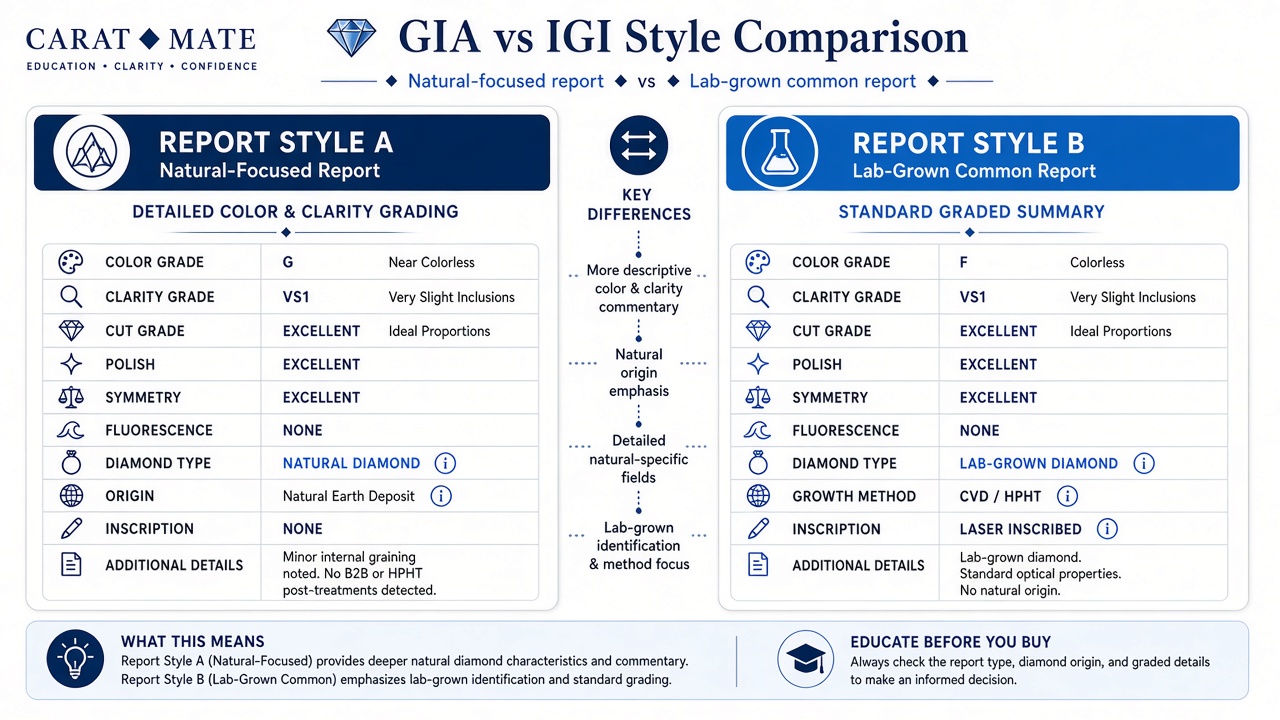
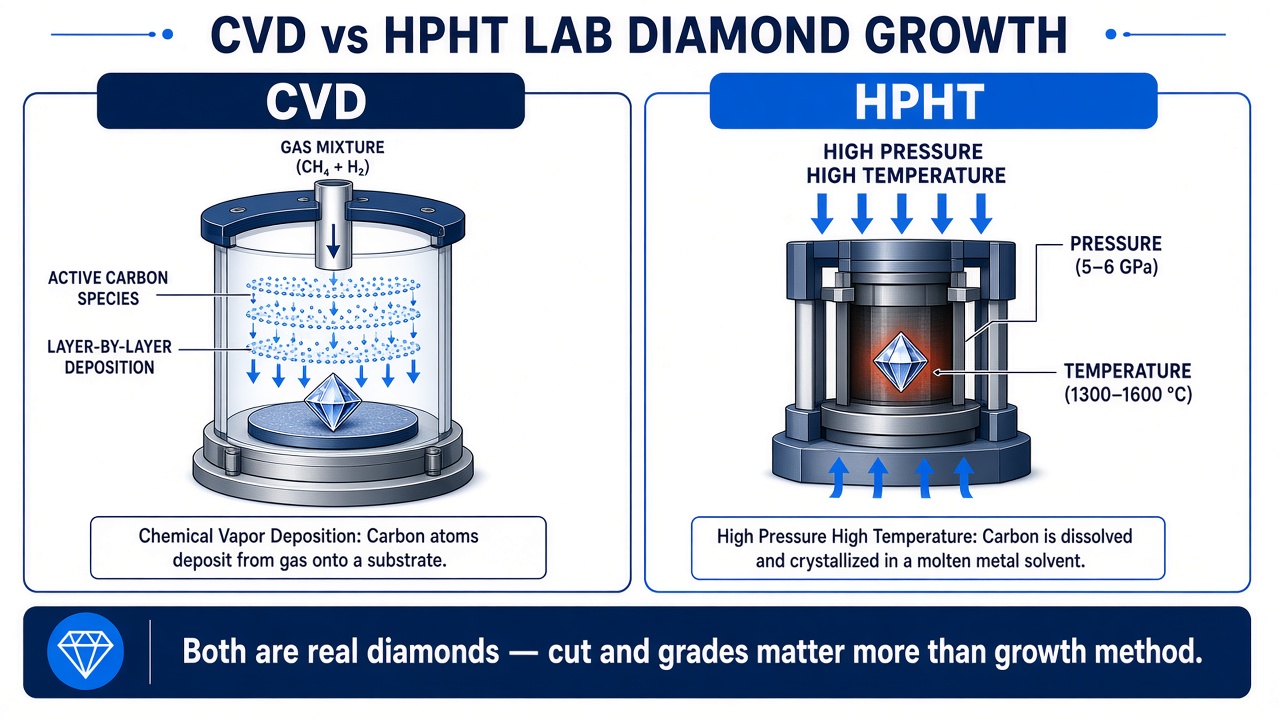
Comments often disclose growth method for lab-grown diamonds (CVD or HPHT), treatments, or inscriptions. Read this section every time on lab-grown stones.
The clarity plot maps inclusions used to support the grade. It helps you judge whether a mark sits under the table (more visible) or near the edge (often hidden in a setting).
On Carat Mate, open the Certificate tab on the diamond detail page when a PDF is available, then request the exact stone if the report and media agree.
Carat Mate lists certified loose diamonds for shoppers in the United States, Canada, the UAE, London, and Australia. Prices are in USD everywhere. We ship to the United States, Canada, the UAE, London, and Australia.